What are the best kids room design ideas for Indian homes?
The best kids room design ideas balance four things: a safe, open floor for play, generous low-level storage, a well-lit study zone, and a neutral base that can change with the child through accessories rather than rebuilding. Plan fixed joinery for a ten-year life and let the theme live in bedding, decals and art.
In most Delhi NCR flats, the kids room is the smallest bedroom, often around 10 x 11 ft or 10 x 12 ft. That makes layout decisions critical. The room must hold a bed, wardrobe, study table, books, toys and often a sibling, while still leaving space to play.
Involve your child in the brief. Ask what they love doing in their room, where they like to read and what they find hard to reach. Even a five-year-old has clear opinions about colours and hiding spots, and children tend to look after a room they helped plan. Then translate those wishes into durable choices: a favourite colour on drawer fronts rather than every wall, a reading nook rather than a theme bed that will feel babyish in three years.
Design by age: toddlers, school kids and teens
Design for the current age but plan joinery for the next stage: toddlers need floor space and safety, school-age children need a study zone and organised storage, and teenagers need privacy, a larger desk and a more grown-up palette.
| Age | Key needs | Design moves |
|---|---|---|
| 2 to 5 years | Play space, safety, easy access | Low open shelves, toy bins, soft rug, rounded corners, a floor-level reading nook |
| 6 to 12 years | Study, hobby display, more clothes | Study table with task light, pinboard, bookshelves, wardrobe with adjustable shelves |
| 13+ years | Privacy, independence, tech | Larger desk, more charging points, full-length mirror, neutral palette with personal accents |
Wardrobes with adjustable shelves and a removable hanging rod adapt as clothes get longer. A study table with a height-adjustable chair and a footrest works from about age six to adulthood.
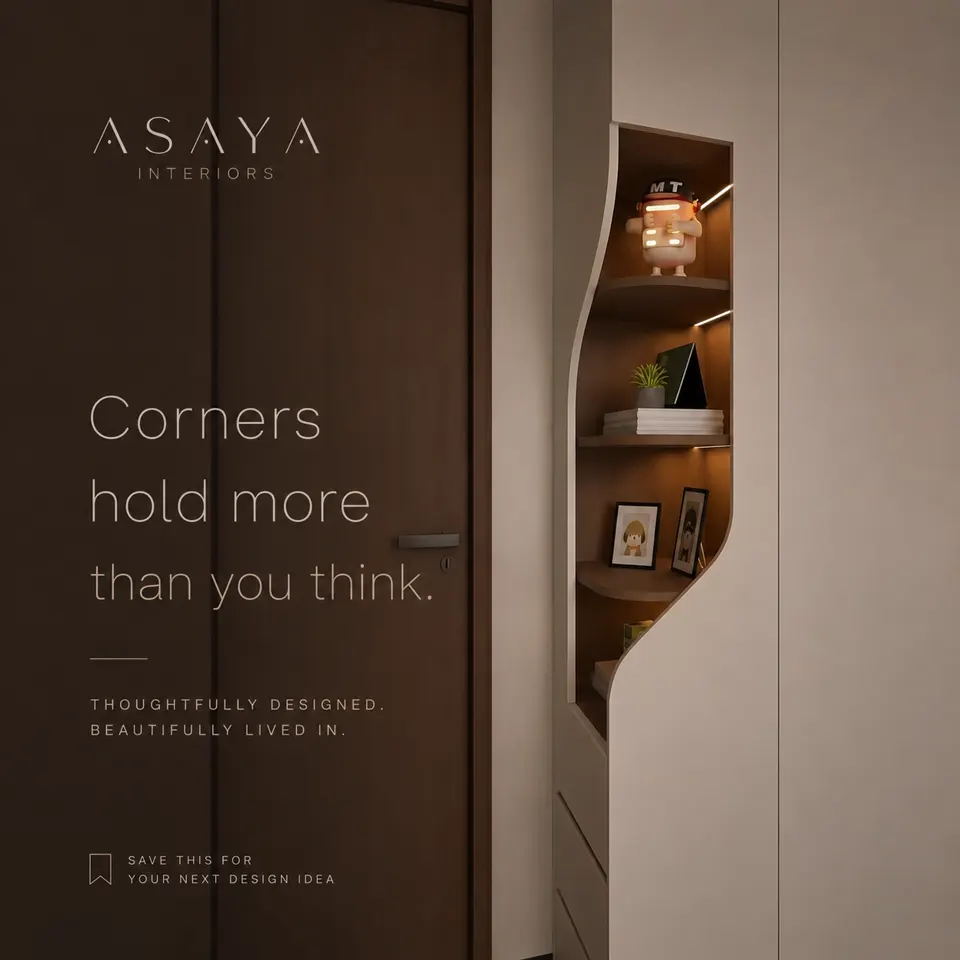
Smart layouts for small kids rooms
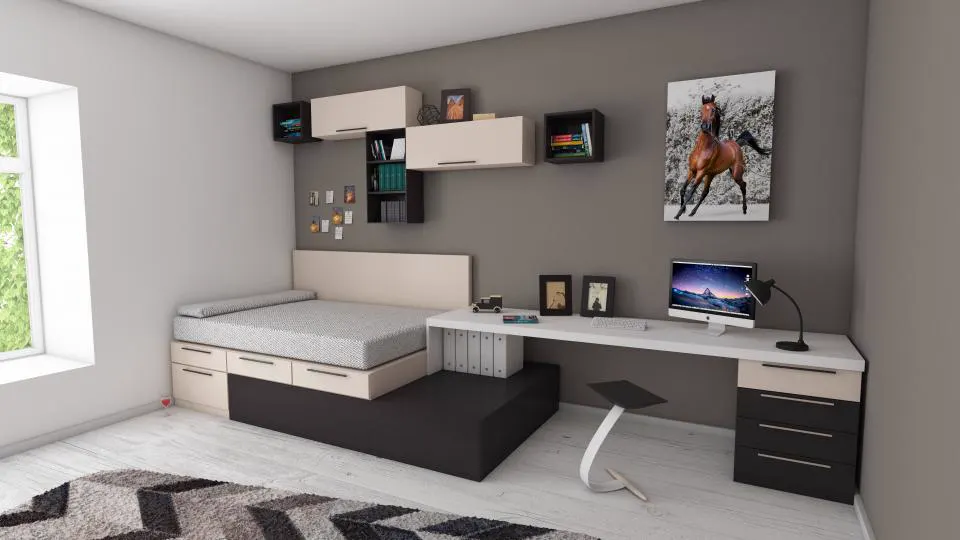
Push the bed against a wall, run the wardrobe and study along one continuous wall, and keep the centre of the room open for play. This single move frees up the most usable floor area.
- Wall-to-wall unit: a wardrobe, study table and bookshelf designed as one joinery piece, often with a loft above for seasonal storage.
- Bed with storage: drawers under a single or three-quarter bed are easier for kids to use than hydraulic lift-ups.
- Bunk beds: ideal for siblings. Keep the upper bunk guard rail at least 150mm above the mattress top and allow roughly 750mm to 900mm between bunks for sitting up.
- Loft beds: put the study or a play den underneath in rooms with ceilings of about 3m or more.
- Trundle beds: a pull-out second bed for sleepovers and visiting cousins.
- Window seat: a cushioned bay seat with drawers below doubles as a reading nook.
For more ideas in compact floor plans, read small apartment interior ideas.
Study zone: dimensions and lighting
A good kids study table is 1,000mm to 1,200mm wide and 500mm to 600mm deep, positioned so the child faces a wall or window, with a 4000K task light on the side opposite the writing hand.
- Height: standard desks sit at about 750mm. For younger children, use an adjustable chair with a footrest rather than a lower desk they will outgrow.
- Storage: a drawer unit below, open shelves above for current books, and a pinboard or magnetic board for timetables.
- Cable management: a grommet and at least two sockets at desk level for a laptop and lamp.
- Light: daylight from the side is ideal. Avoid a downlight directly behind the chair that casts shadows on books. Our home lighting design guide explains task lighting in more detail.
- Screen time: place the desk so the screen does not face a bright window.
Many families also follow the traditional preference of the child facing east or north while studying; see our vastu tips for home interiors if that matters to you.
Storage ideas kids will actually use
Kids use storage they can reach and understand: low open shelves, labelled bins, pull-out drawers and hooks at their height. Keep adult-managed storage higher up.
- Toy bins on the lowest shelf, 300mm to 450mm from the floor.
- Picture labels on bins for toddlers who cannot read yet.
- Hooks at around 900mm to 1,100mm for school bags and jackets.
- Pull-out drawers instead of deep shelves, where toys get lost.
- A display ledge for artwork, trophies and Lego builds.
- A loft or top shelves for seasonal clothes and memory boxes.
- Wardrobe internals with a lower hanging rod for younger children, raised later.
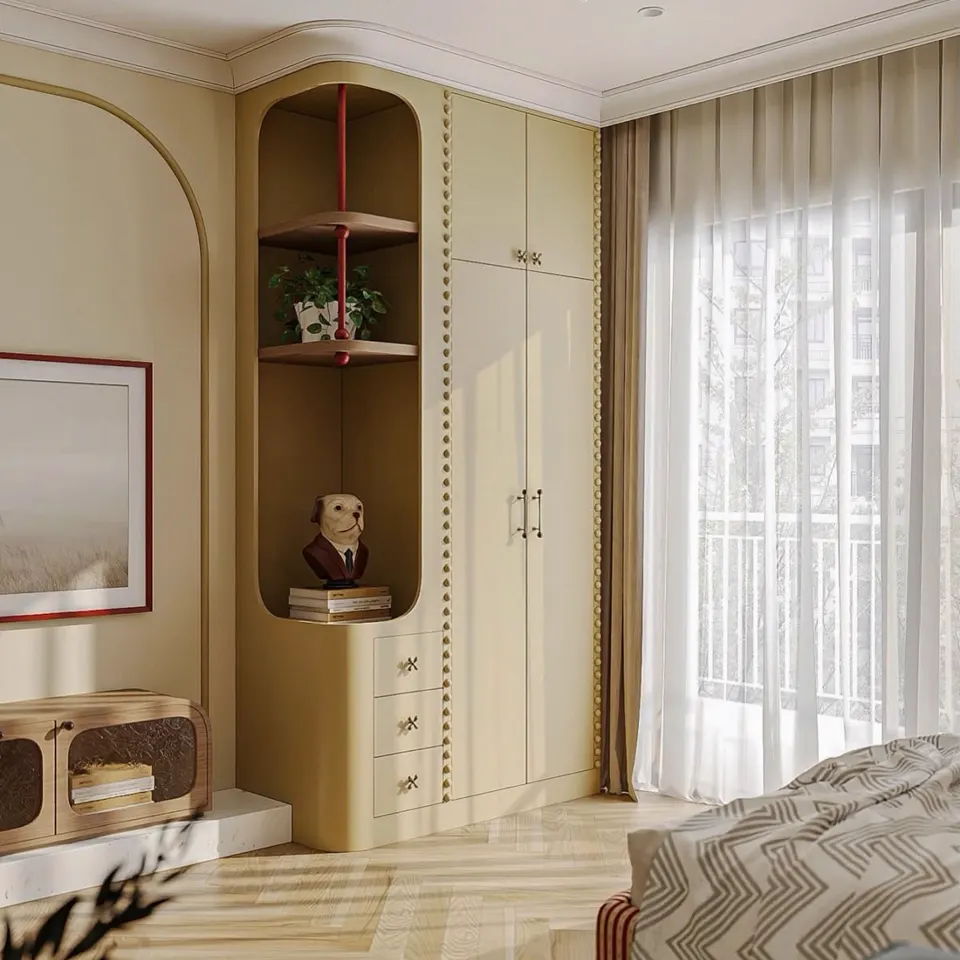
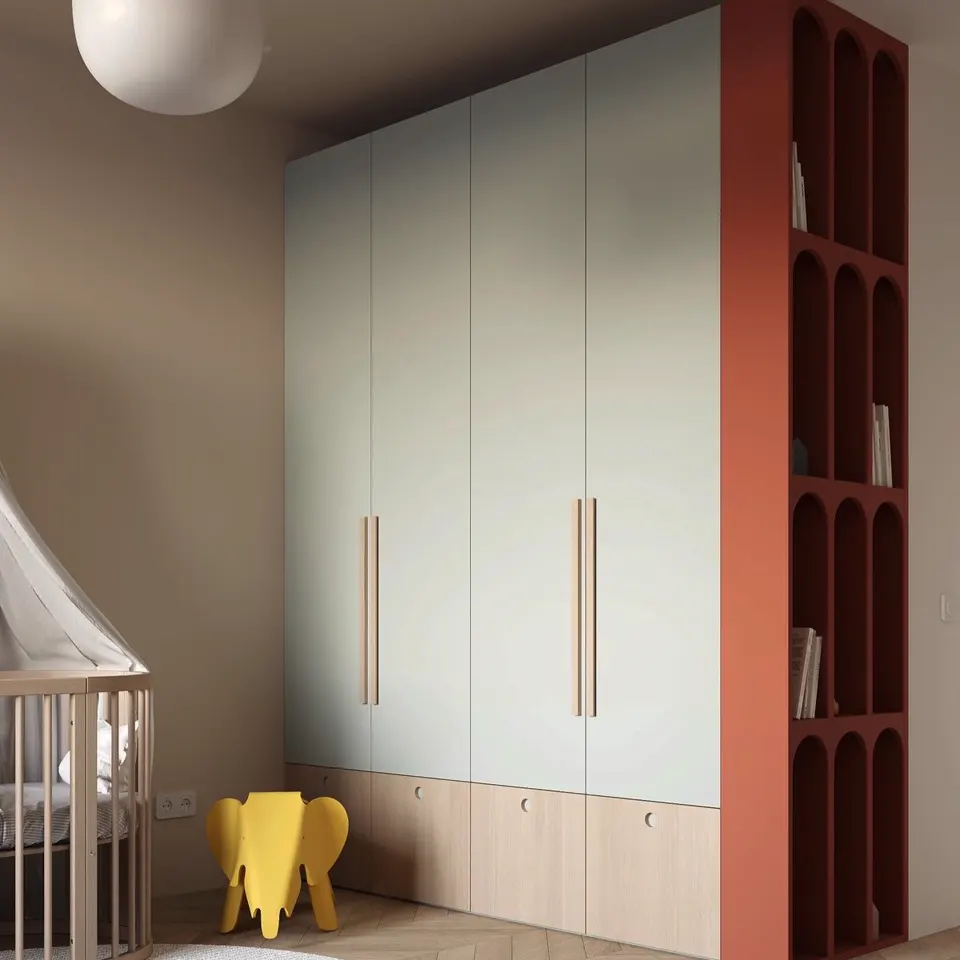
Wardrobe shutters in soft pastels or wood grain look good now and still suit a teenager later. For material choices, see laminate vs acrylic vs veneer wardrobes.
Safety checklist for a kids room
Safety comes first: anchor tall furniture to the wall, round off corners, use low-emission materials, fit window grills and choose child-safe electrical points.
- Anchor wardrobes, bookshelves and dressers to the wall with anti-tip fittings.
- Use rounded or softened edges (radius corners or edge banding) on tables, beds and shelves.
- Choose E1 or lower emission boards and low-VOC paints; ventilate well after painting.
- Install shuttered sockets and keep electrical points out of reach for toddlers.
- Fit window grills or safety locks; avoid placing beds or climbable furniture under windows.
- Use soft-close hinges and drawer channels to protect little fingers.
- Avoid glass shutters and glass-top tables in young children's rooms.
- Use a non-slip underlay beneath rugs.
- Choose cordless blinds or keep blind cords tied high.
Colours, themes and finishes
Keep walls and large joinery in soft, versatile colours and bring the theme in through bedding, wallpaper on one wall, decals and accessories. Themes change every few years; carpentry should not have to.
- Calm bases: soft mint, powder blue, warm white, pale peach or light sage.
- Accent ideas: a mural or wallpaper behind the bed, a painted arch, or colourful drawer fronts.
- Durable finishes: washable satin paint, anti-scratch laminates and stain-resistant fabrics.
- Chalkboard or magnetic paint: a section of wall where drawing is allowed.
- Theme ideas: space, jungle, travel, sports or a simple Scandinavian look that suits any age.
For broader palette advice, see our colour palette ideas for Indian homes.
Budget and planning your kids room
A kids room is usually priced like any bedroom, based on wardrobe area, study unit, bed and finishes. Investing in good-quality core joinery and keeping décor flexible gives the best long-term value.
Indicatively, wardrobes in Delhi NCR typically cost around ₹1,200 to ₹3,500 per sq ft of shutter area depending on materials and hardware, with the study unit, bed and décor added on top. Use the interior cost calculator for a ballpark figure, and ask for a site-specific quote before deciding.
At Asaya Interiors we design kids rooms with 3D visuals so parents and children can see the room before it is built. Explore our kids room interior design service, or call +91 98001 08800 to plan a room your child will love now and still use years from now.
Frequently asked questions
What is the ideal size for a kids study table?
A width of 1,000mm to 1,200mm, a depth of 500mm to 600mm and a standard height of about 750mm suit most children. Pair it with an adjustable chair and footrest so the same desk works as the child grows.
Are bunk beds safe for children?
Bunk beds are generally suitable for older children when built well. Use sturdy construction, guard rails at least 150mm above the mattress, a fixed ladder and enough headroom. Many families prefer that younger children sleep on the lower bunk.
Which colours are best for a kids room?
Soft, versatile colours such as mint, powder blue, pale peach, light sage and warm white work well. Add brighter colours through bedding, wallpaper and accessories that can be changed as tastes evolve.
How do I design a kids room for two siblings?
Use bunk or trundle beds to save floor space, give each child their own storage section and desk area, and choose a shared neutral palette with personal accents for each child.
How can I make a kids room grow with the child?
Choose adjustable wardrobe internals, a full-size study table, a standard-size bed and neutral joinery. Keep the theme in wall décor, bedding and accessories so updates are quick and inexpensive.