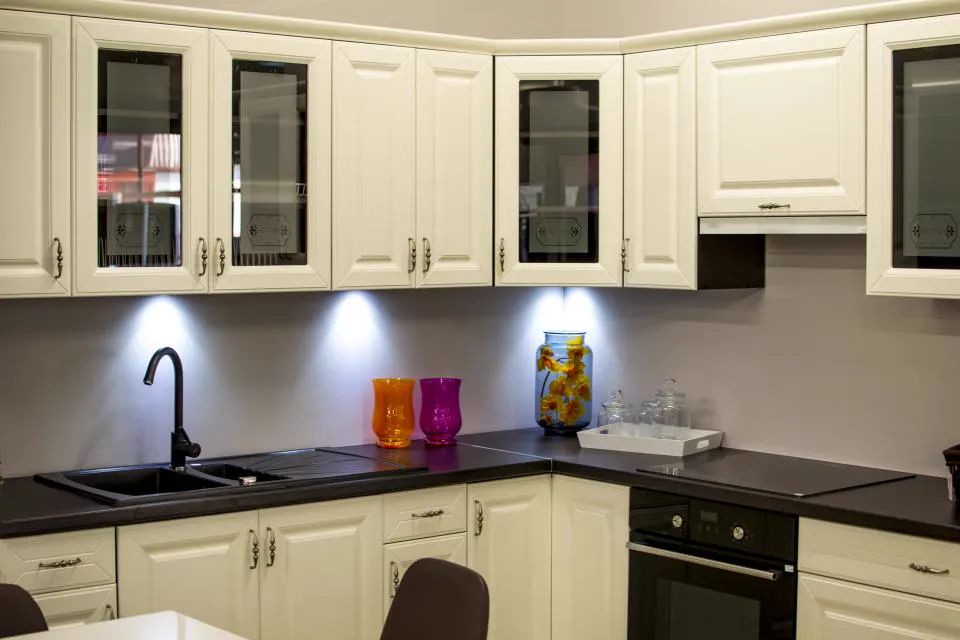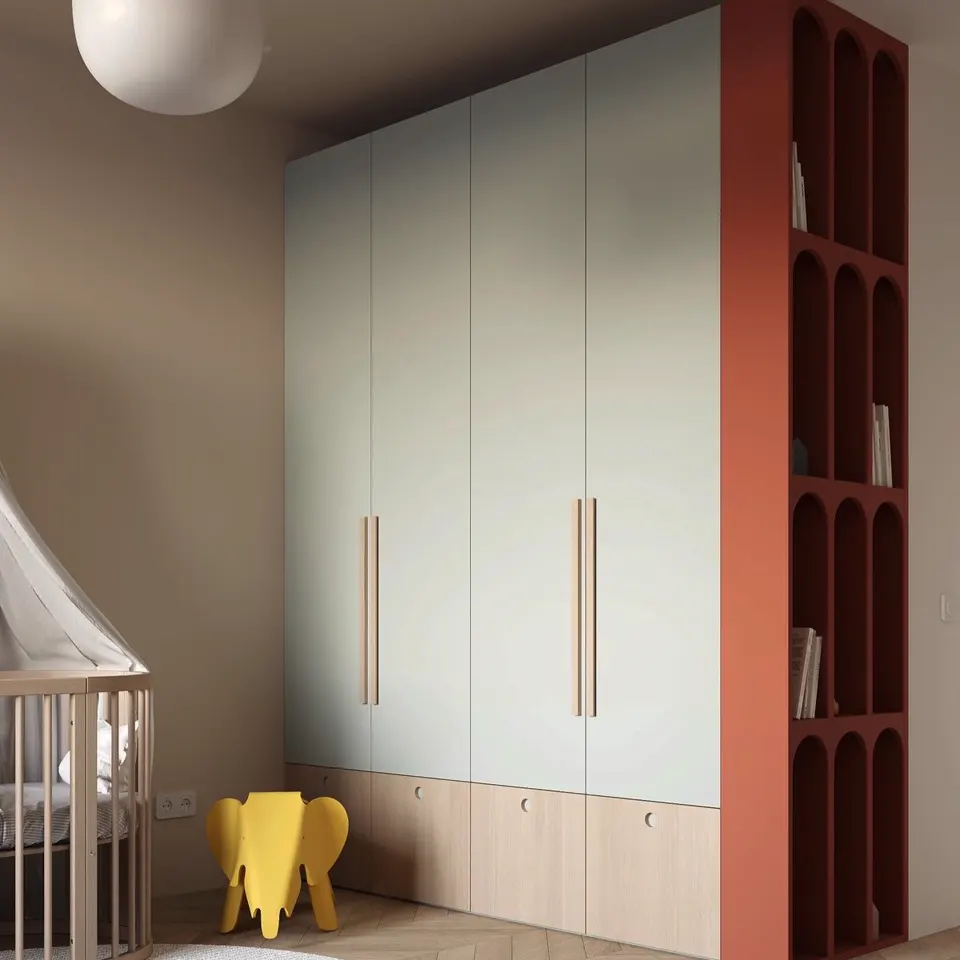
Laminate vs acrylic vs veneer wardrobe: quick verdict
Choose laminate for everyday durability and budget control, acrylic for a sleek high-gloss or premium matte look, and veneer for a natural, luxurious wood finish. Many homes mix them: veneer in the master bedroom, laminate in kids’ and guest rooms.
A wardrobe finish affects more than looks. It decides how the shutters handle fingerprints, sunlight, humidity and the occasional knock from a suitcase. It also changes the price noticeably, because shutters make up a large part of wardrobe cost. The carcass behind the finish matters too: an 18mm plywood or HDHMR base with proper edge-banding is what keeps doors flat and hinges tight for years.
Before comparing finishes, remember that the substrate is usually the same: the laminate, acrylic sheet or veneer is pressed onto plywood, MDF or HDHMR. So you are really choosing a surface, and each surface has its own personality.
Side-by-side comparison
The table summarises how the three main finishes compare on the factors homeowners care about most.
| Factor | Laminate | Acrylic | Veneer |
|---|---|---|---|
| What it is | Decorative paper layers bonded with resin under pressure | Acrylic sheet (PMMA) bonded to board | Thin slice of real wood on board, then polished |
| Look | Solid colours, wood grains, stone, textures; matte to gloss | High gloss, mirror-like depth; anti-fingerprint matte also available | Natural grain, each sheet unique |
| Scratch resistance | High | Moderate; fine scratches visible on gloss | Moderate; depends on polish |
| Moisture and heat | Good | Good | Needs good sealing |
| Fingerprints | Low on matte and textured | High on gloss | Low to moderate |
| Fading in sunlight | Good quality resists well | Good UV-grade sheets resist well | Can change tone over time |
| Repair | Difficult; shutter usually replaced | Minor scratches can be polished | Can be sanded and re-polished |
| Indicative wardrobe cost | ₹1,200 – ₹2,000 per sq ft | ₹1,800 – ₹2,800 per sq ft | ₹2,300 – ₹3,500+ per sq ft |
Costs are indicative for Delhi NCR in 2026, per sq ft of shutter area including carcass and standard fittings, and depend on materials and scope.
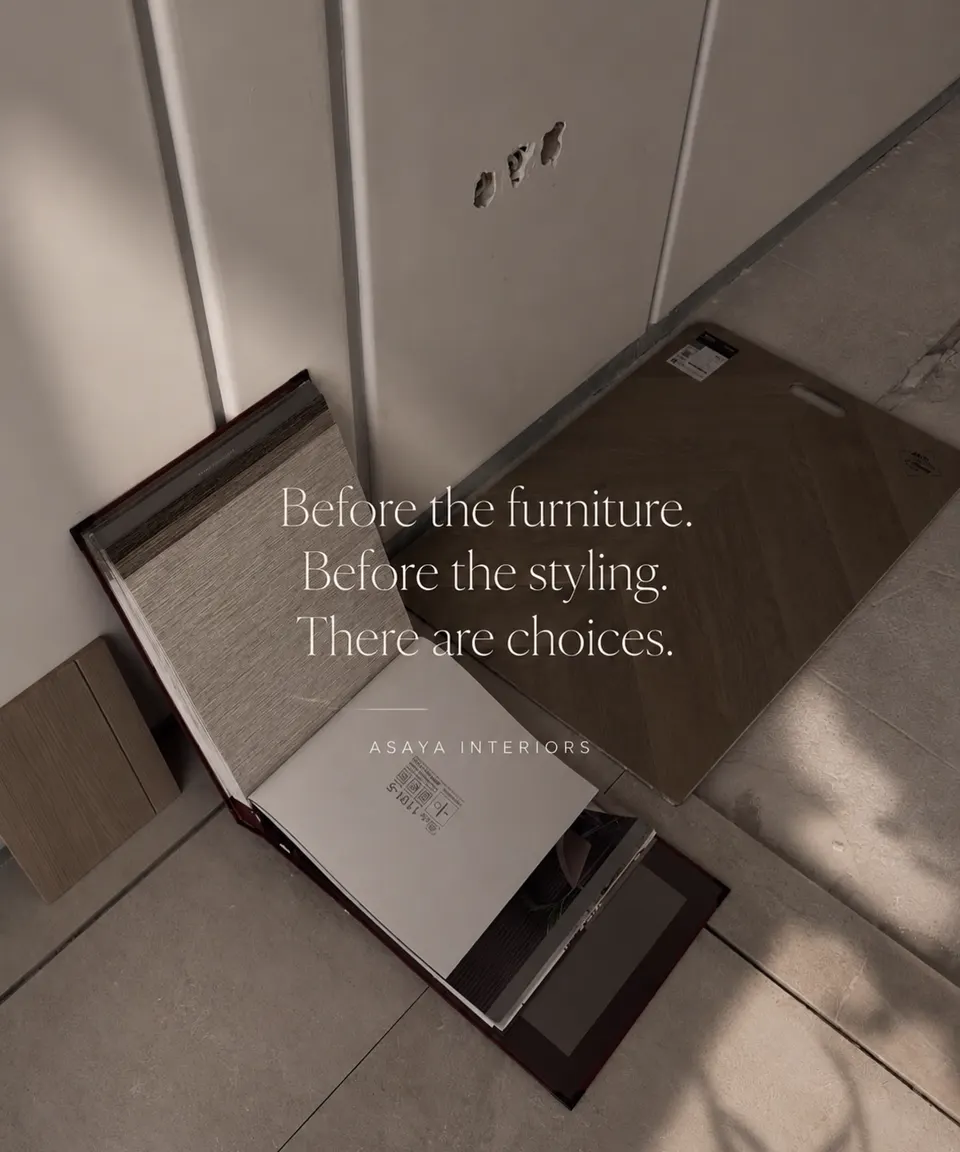
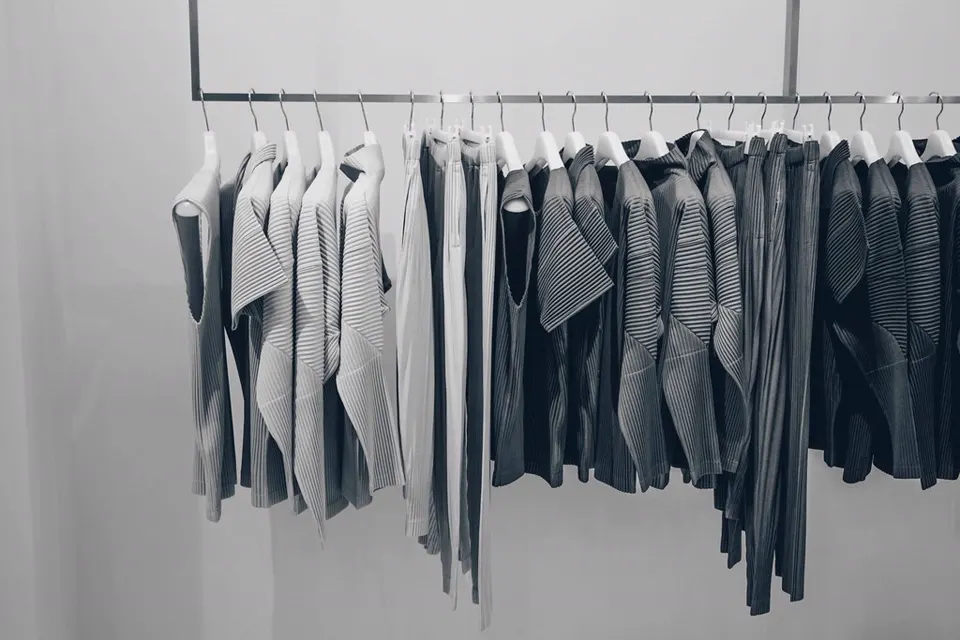
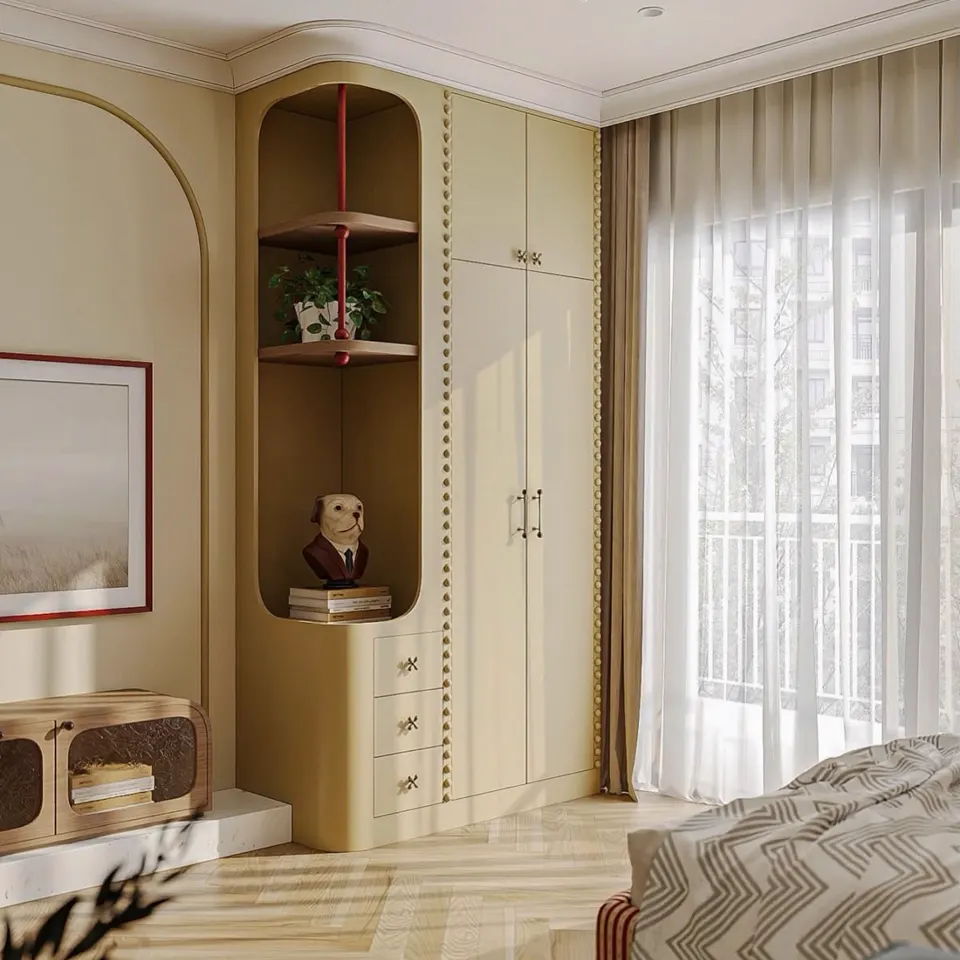
Laminate wardrobes: the practical all-rounder
Laminate is the most popular wardrobe finish in India because it is tough, affordable and available in hundreds of designs.
Pros
- Resists scratches, stains and heat well.
- Huge range: suede, wood grains, stone looks, fabric textures, solid colours.
- Matte and textured versions hide fingerprints and dust, useful in dusty NCR homes.
- Easy to clean with a damp cloth.
Cons
- Visible dark edge lines on some laminates unless colour-matched edge-banding is used.
- Cannot be refinished; damaged shutters are replaced.
- High-gloss laminates are less glossy than acrylic.
Best for: kids’ rooms, guest rooms, rental homes and any wardrobe that sees heavy use. Our kids’ room interior design projects use durable textured laminates for exactly this reason.
Acrylic wardrobes: sleek and glossy
Acrylic gives a seamless, reflective finish that makes bedrooms look brighter and more contemporary.
Pros
- Deep, mirror-like gloss that bounces light in smaller rooms.
- Rich, uniform colours; anti-fingerprint matte variants are also available.
- Moisture resistant and colour stable in good grades.
- Minor surface scratches on gloss can often be polished out.
Cons
- Shows fingerprints and fine swirl marks, especially in dark colours.
- Costs more than laminate.
- Needs careful handling during installation; protective film should stay on until the end.
Best for: master bedrooms and modern homes where a clean, handleless look is wanted. Pair gloss acrylic with profile handles to keep fingers off the surface.
Veneer wardrobes: natural luxury
Veneer brings the character of real wood (oak, walnut, teak and more) at a fraction of solid timber cost.
Pros
- Authentic grain and warmth that no print fully copies.
- Can be stained and finished in matte, satin or gloss PU or melamine polish.
- Can be sanded and re-polished years later.
- Pairs beautifully with fluted details and brass hardware for a quiet-luxury look.
Cons
- Most expensive of the three.
- Quality depends heavily on polish work and sheet matching.
- Natural variation means shutters may differ slightly in tone.
- Needs protection from direct sunlight and moisture.
Best for: master bedrooms, walk-in wardrobes and luxury interiors where craftsmanship is the focus.
Other finishes worth knowing
PU paint, glass, membrane and fabric-look finishes each fill a specific need.
| Finish | Why choose it | Consider |
|---|---|---|
| PU paint (duco) | Any colour, seamless matte or gloss, curved shapes | Higher cost; chips need touch-up |
| Lacquered or back-painted glass | Glossy, easy to clean, modern | Weight; needs strong hinges |
| Fluted or tinted glass with profile | Display sections, walk-in wardrobes | Contents should be tidy |
| Membrane / PVC foil | Profiled classic shutters at moderate cost | Can peel near heat |
| Mirror shutters | Dressing mirror built in; room looks larger | Placement relative to the bed |
Choosing by room, budget and lifestyle
Match the finish to how hard the wardrobe will be used and how much upkeep you are happy with.
- Families with young children: matte or textured laminate.
- Small, dark bedrooms: light-coloured gloss acrylic or a mirror shutter.
- Master suites: veneer or PU, perhaps with fluted details.
- Rental or investment flats: laminate for value and easy replacement.
- Sunny, west-facing rooms: UV-stable laminate or acrylic; protect veneer with curtains.
- Mixed approach: veneer or acrylic on visible shutters, laminate inside and on lofts.
Think about the whole room, too. A glossy acrylic wardrobe beside a matte wooden bed and textured curtains can look striking, but three glossy surfaces in one small bedroom can feel busy and reflect bedside light at night. Veneer looks richest when its grain direction is matched across shutters, so ask whether the sheets will be book-matched or at least sequenced. With laminate, ask for samples in daylight and under your planned 2700K–3000K lighting, because colours shift noticeably between the two. Finally, check the inside finish: a white or light-grey interior laminate makes clothes easier to see than a dark one.
Whichever finish you choose, insist on an 18mm carcass, soft-close hinges and properly sealed edges. The same material logic applies to kitchens, as our modular kitchen guide explains, and our plywood grades guide covers the board underneath.
Care tips to keep shutters looking new
Use a soft microfibre cloth, mild soap and water, and avoid abrasive cleaners on every finish.
- Laminate: wipe with a damp cloth; a mild cleaner removes most marks.
- Acrylic: use microfibre only; avoid paper towels that cause swirl marks. Remove protective film only after installation.
- Veneer: dust regularly, avoid water standing on the surface, and keep out of harsh direct sun.
- All finishes: check hinge alignment every few months and keep the room ventilated during monsoon to avoid musty smells.
Still unsure which finish suits your bedroom? Visit Asaya Interiors in Sector 81, Faridabad, to see and touch material samples side by side, or call +91 98001 08800. You can also browse our wardrobe design service first.
Frequently asked questions
Which is better for a wardrobe: laminate or acrylic?
Laminate is better for durability, scratch resistance and budget, and suits busy family bedrooms. Acrylic is better if you want a glossy, premium look and do not mind wiping fingerprints. Many homeowners use acrylic in the master bedroom and laminate elsewhere.
Is veneer better than laminate?
Veneer looks and feels more natural and can be refinished, which makes it ideal for premium spaces. Laminate is tougher and cheaper, with less maintenance. The better choice depends on whether you value authenticity or practicality more.
What is the cost of an acrylic wardrobe per sq ft?
In Delhi NCR, acrylic wardrobes typically cost around ₹1,800 to ₹2,800 per sq ft of shutter area including carcass and standard fittings. Prices depend on sheet quality, board grade and hardware, so treat this as indicative.
Does acrylic get scratched easily?
High-gloss acrylic can show fine scratches and swirl marks more than laminate, especially in dark colours. Using microfibre cloths and choosing anti-scratch or matte acrylic reduces this.
Which wardrobe finish is best for humid conditions?
Laminate and acrylic both handle humidity well when edges are properly sealed. Veneer needs good polish and ventilation. The carcass matters just as much, so use good-quality plywood or HDHMR with full edge-banding.
How long do laminate, acrylic and veneer wardrobes last?
With a good plywood or HDHMR carcass, sealed edges and quality hinges, all three finishes can serve well for many years. Laminate tolerates rough use best, acrylic keeps its look with gentle cleaning, and veneer can be re-polished to refresh it later.
Can I combine different finishes in one wardrobe?
Yes. A common approach is veneer or acrylic on the main shutters, a mirror or glass shutter in one section, and laminate on lofts and interiors. This balances looks and cost.