What does bathroom interior design involve?
Bathroom interior design involves layout, plumbing, waterproofing, tiling, sanitaryware, storage, ventilation and lighting, in roughly that order of importance. Most bathroom failures in NCR homes trace back to skipped waterproofing or poor slopes, not to the tiles chosen.
A typical brief includes:
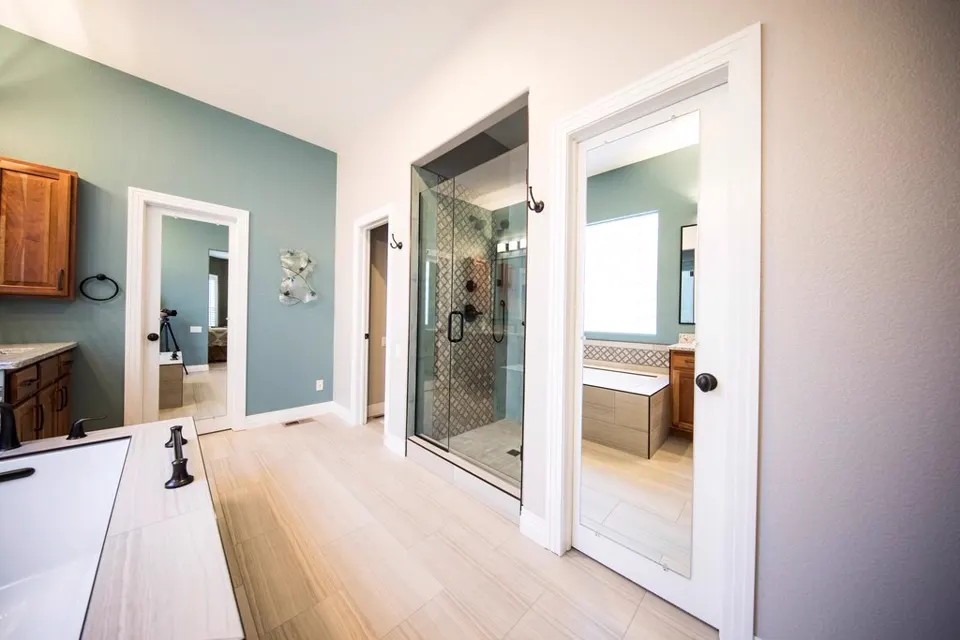
- Layout: separating wet (shower) and dry (WC and basin) zones with a glass partition or a small level change.
- Plumbing: concealed CPVC lines, correctly sized drains and a floor slope of roughly 1:60 to 1:100 towards the drain.
- Waterproofing: membrane or cementitious coating on the floor and at least 300mm up the walls, and up to about 1800mm–2100mm in the shower.
- Fittings: wall-hung WC, concealed cistern, thermostatic or single-lever diverter, and a good-quality geyser.
- Storage: vanity, mirror cabinet and niches for toiletries.
- Ventilation and light: an exhaust fan sized for the room, and layered lighting.
Bathroom renovation: the right sequence
A proper bathroom renovation takes about 2 to 4 weeks and follows a fixed sequence: demolition, plumbing, waterproofing, testing, tiling, fixtures and finishing. Rushing any step, especially the water test, causes problems later.
- Demolition of old tiles and removal of old GI pipes, which are often corroded in older Faridabad and Delhi homes.
- New plumbing in CPVC or PPR, pressure-tested before being covered.
- Waterproofing with corners reinforced, followed by a pond test of 24 to 48 hours.
- Tiling with proper slope, using tile adhesive rather than only cement mortar.
- Fixtures and vanity installation, with silicone sealing at every joint.
- Ceiling, lights and exhaust, using moisture-resistant materials.
If your bathroom is part of a larger refresh, see our old house renovation service, and for a step-by-step reading list, the bathroom renovation guide.
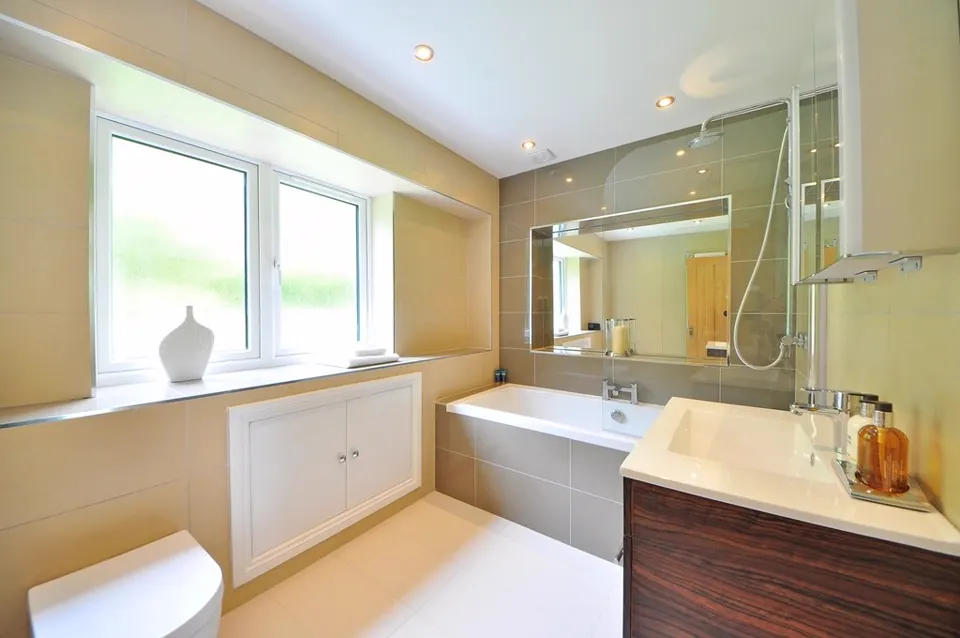
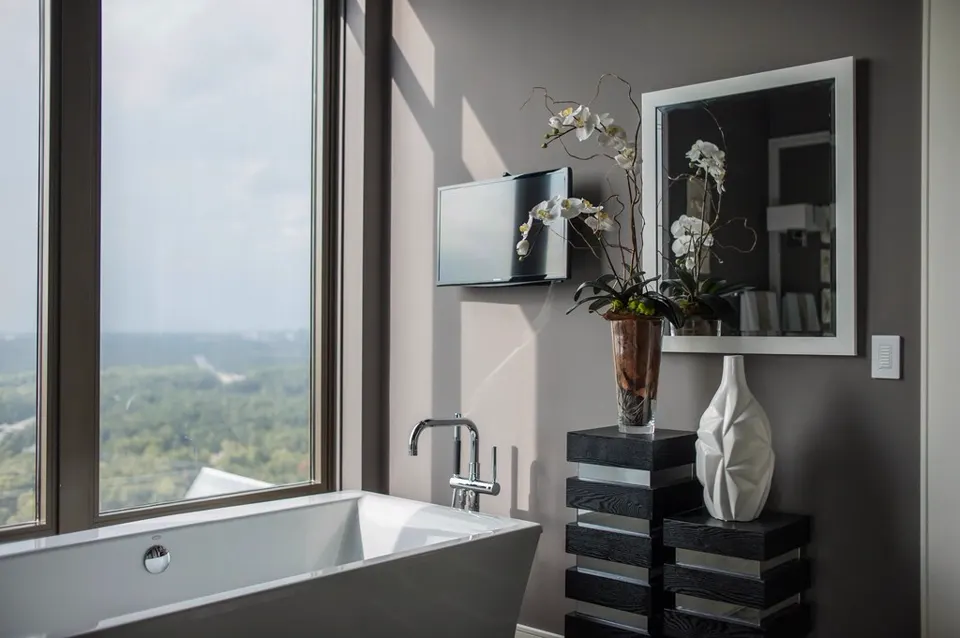
Washroom design choices: tiles, fittings and vanities
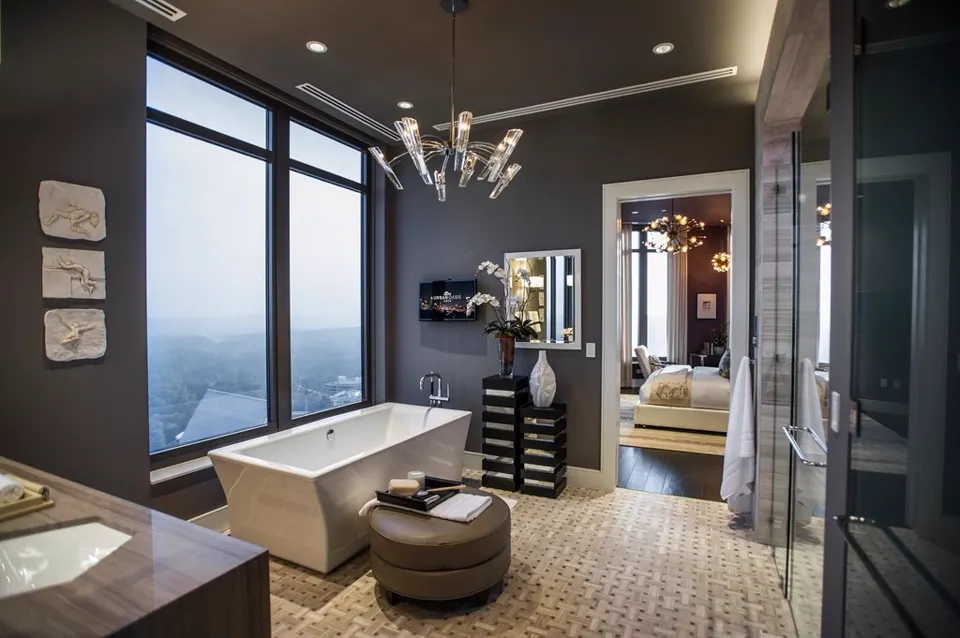
For washroom design in Delhi NCR, choose anti-skid matte floor tiles, lighter wall tiles that hide hard-water marks, and fittings with good chrome or PVD coatings. Dark, glossy surfaces show white scaling within weeks.
| Element | Recommended | Avoid |
|---|---|---|
| Floor tiles | Matte or anti-skid, R10 or higher slip rating | Polished glossy tiles |
| Wall tiles | Large-format, light or textured | Very dark glossy tiles |
| Vanity carcass | BWP plywood, WPC or HDHMR with sealed edges | Particle board or MR plywood |
| Counter | Quartz, granite or solid surface | Porous stone without sealing |
| Shower partition | 8mm–10mm toughened glass | Plain float glass |
| Fittings | Branded chrome or PVD, with aerators | Unbranded fittings |
Hard water is a real issue across Faridabad and much of NCR. A whole-house or bathroom-line softener protects fittings, glass and tiles, and makes cleaning far easier.
Lighting, ventilation and storage
Bathrooms need bright, even light at the mirror and a warmer ambient light elsewhere. Use IP-rated fixtures in wet areas and a properly sized exhaust fan that vents outside, not into a shaft that recirculates air.
- Mirror light: 4000K with CRI above 90 for grooming and make-up; lit mirrors avoid shadows on the face.
- Ambient: 3000K cove or downlights for a relaxed evening feel.
- Niche lighting: a small LED strip in the shower niche adds depth.
- Ventilation: exhaust fans with enough capacity for the room size, ideally with a timer.
- Storage: a wall-hung vanity keeps the floor clear for mopping; a mirror cabinet holds daily items.
Explore more in our lighting design service.
Bathroom interior design cost in Delhi NCR
Indicatively, a bathroom renovation in Delhi NCR costs about ₹1.5 lakh to ₹4 lakh for a standard 5 ft x 8 ft bathroom, and more for larger or luxury bathrooms with premium fittings, stone and glass. Costs depend heavily on the brands and materials chosen.
- Essential: new tiles, waterproofing, CPVC plumbing, standard fittings and a simple vanity, typically ₹1.5 – 2.2 lakh.
- Mid-range: wall-hung WC, glass partition, quartz vanity and lit mirror, typically ₹2.2 – 3.2 lakh.
- Premium: large-format tiles, premium fittings, rain shower, and custom niches, typically ₹3.2 – 4 lakh+.
These figures are indicative and depend on scope; we always confirm after inspecting existing plumbing. For whole-home budgets, try the interior cost calculator.
Mistakes to avoid in a bathroom
The biggest bathroom mistakes are skipping the pond test and getting the floor slope wrong. Other common problems we fix for clients:
- No step or threshold between the shower and the dry area, so water spreads across the floor.
- Geyser and exhaust points forgotten until after tiling.
- Niches placed where they break a waterproofed wall without extra sealing.
- Too many grout lines in the shower, which collect scale and mould.
- Wooden vanities in non-waterproof boards that swell within a monsoon.
- No grab bars for elderly family members.
Designing for elders and children
If parents or young children use the bathroom, we recommend a level or near-level shower entry, grab bars beside the WC and in the shower, a fold-down shower seat, anti-skid tiles and a thermostatic mixer to prevent scalding. Lever handles are easier than knobs for arthritic hands, and a night light near the door makes late-night visits safer. These additions cost little during a renovation but are difficult to retrofit later. You can also coordinate a matching family bathroom within a full home interior design project.
Ready for a bathroom that looks good and stays dry? Call +91 98001 08800 to arrange a site inspection; we will check your existing plumbing and waterproofing before recommending anything.
Frequently asked questions
How long does a bathroom renovation take?
A standard bathroom renovation usually takes 2 to 4 weeks, including demolition, plumbing, waterproofing with a pond test, tiling and fixture installation. Custom vanities or imported fittings can add time.
Can I renovate a bathroom without breaking tiles?
Cosmetic upgrades like new fittings, a vanity, a lit mirror or tile-on-tile cladding are possible without demolition. However, if there is seepage or old GI plumbing, breaking tiles to fix the source is the only lasting solution.
Which tiles are best for a bathroom floor?
Matte, anti-skid vitrified or ceramic tiles with a good slip rating are best for safety. Smaller tiles or tiles with texture also help grip, and lighter shades hide hard-water marks better than dark colours.
Is a wall-hung toilet a good idea?
Yes, it makes floor cleaning easier and gives the bathroom a clean, modern look. It needs a concealed cistern and a strong frame, and the cistern access plate should remain reachable for maintenance.
How do I deal with hard water stains?
Install a water softener, choose light-coloured matte tiles and fittings with good coatings, and wipe glass partitions after use. Mild acidic cleaners help, but avoid harsh chemicals on chrome and natural stone.