What goes into a thoughtful pooja room design?
A good pooja room design starts with how your family prays: daily aarti, weekly path, festival gatherings or quiet meditation. The rituals decide the size, seating, storage and ventilation long before we choose the finish.
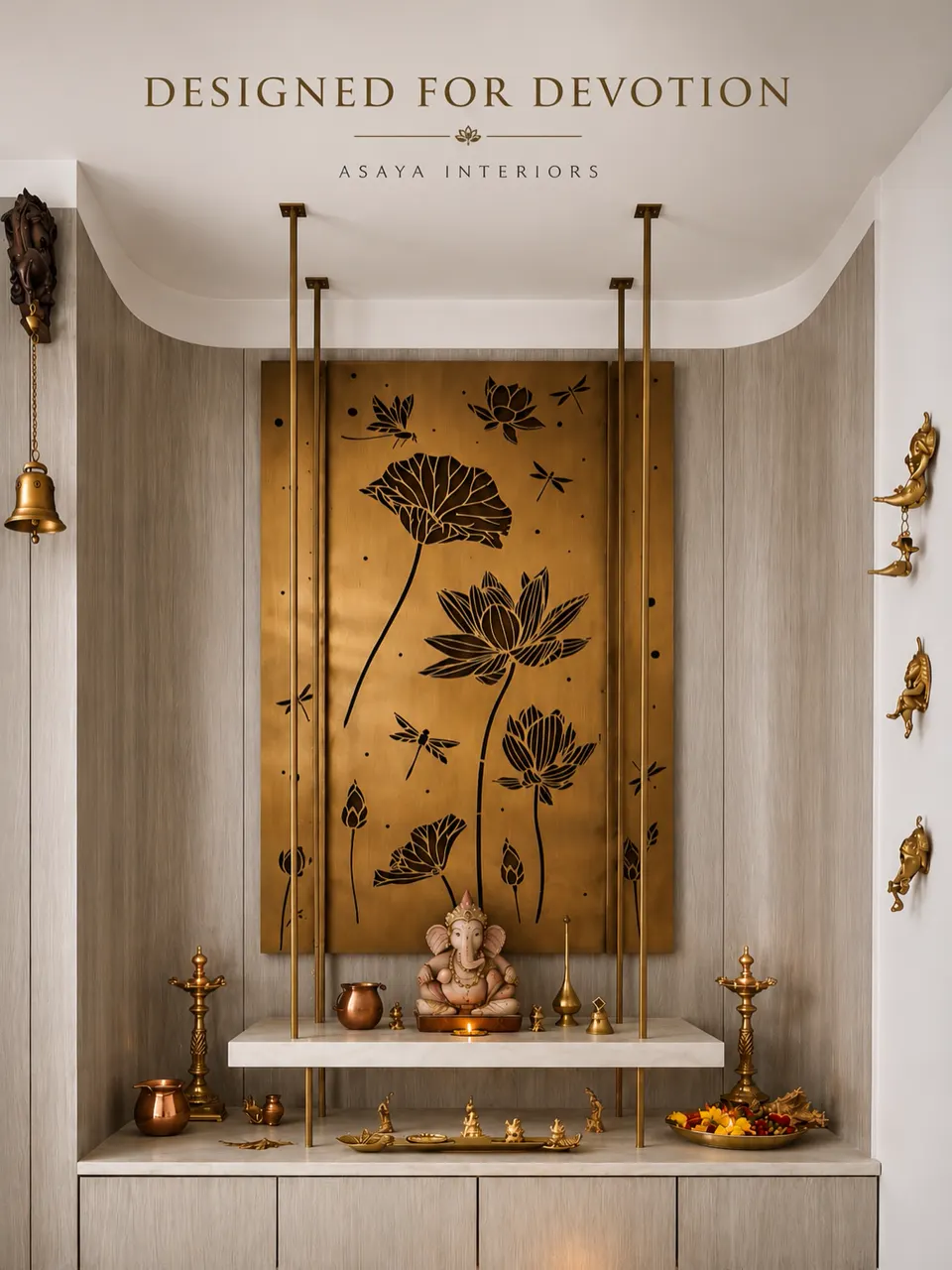
One of our own projects, pictured on this page, is built around a lotus panel. The lotus, a symbol of purity rising above its surroundings, gives the space a clear focal point without any clutter. Designed for devotion, it shows how a pooja space can be deeply traditional in meaning and still feel clean and contemporary in form.
We consider:
- Placement: many families prefer the north-east of the home, with the devotee facing east or north while praying.
- Idol height: the deity platform is usually set so the idols sit at or slightly above chest level when you are seated or standing, depending on how you pray.
- Storage: drawers for agarbatti, diyas, matchboxes, books, bells and festival decor.
- Fire safety and ventilation: heat-resistant surfaces near diyas, and a way for smoke to escape.
- Seating: a low stool, asan space or a pull-out seat for elders.
Our pooja room design ideas and Vastu article goes deeper into placement guidelines.
Mandir design for home: room, alcove or wall unit?
Choose a separate pooja room if you have the space and pray elaborately; choose an alcove or a wall-mounted mandir design for home when space is tight, which is the case in most NCR apartments.
| Format | Space needed (approx.) | Best for |
|---|---|---|
| Dedicated pooja room | 4 ft x 5 ft or more | Kothis, villas, larger builder floors |
| Alcove or niche with doors | 3 ft to 4 ft wide, 18 in to 24 in deep | 3BHK flats, foyer or dining walls |
| Floor-standing puja unit | 2 ft to 3 ft wide | 2BHK flats and rented homes |
| Wall-mounted mandir | 2 ft wide, 12 in to 15 in deep | Compact apartments, kitchens |
For smaller homes, a puja unit with folding or pocket doors lets the space close neatly when not in use, while still feeling special when opened. We also avoid placing the mandir on a wall shared with a toilet or directly under a staircase, a preference most families share.
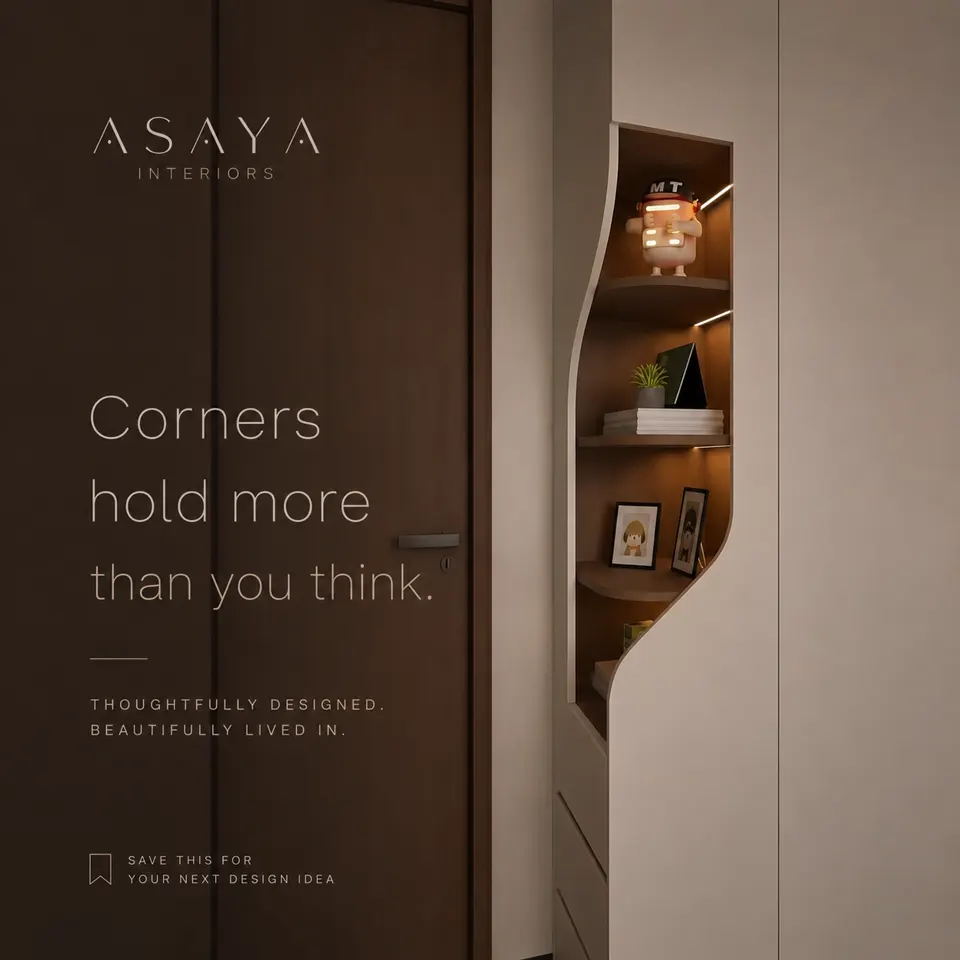


Materials and details for a puja unit
For the structure we use BWP plywood or solid wood, finished with veneer, PU or duco, because pooja areas see regular cleaning with water and exposure to oil and heat from diyas. Marble or Corian works well for the deity platform.
- Backdrop panels: carved lotus or mandala CNC panels, backlit jaali, fluted wood, onyx or textured stone.
- Doors: jaali shutters, fluted glass or brass-inlay panels that allow the idols to be seen and air to move.
- Bells and brass: hanging brass bells and a brass or copper diya ledge add warmth and tradition.
- Platform: white marble, Corian or quartz, easy to wipe and heat-tolerant.
- Drawers: soft-close drawers below, with a separate heat-safe compartment for matchboxes and camphor.
- Flooring: a different inlay or a raised step to mark the sacred zone.
Explore more carving and panel ideas under wall panelling and decor.
Lighting a pooja room
Use warm 2700K light in a pooja room, with a concealed strip behind the backdrop and a soft focused light on the idols. Harsh white light takes away the sense of calm.
We usually combine a backlit panel, a small spotlight or linear profile above the deity platform, and a dimmable ambient light. A separate switch for the backlight lets families leave a gentle glow on through the evening. Where diyas are lit daily, we keep LED strips well away from open flame and use heat-resistant profiles. Read more in our lighting design service.
Vastu considerations, simply explained
Commonly followed Vastu guidelines place the pooja space in the north-east, east or north of the home, keep it away from bathrooms and bedrooms where possible, and avoid storing clutter above the idols. We treat these as preferences to balance with the realities of the floor plan.
- Avoid placing idols directly on the floor; use a raised platform.
- Leave a little space between the idols and the back wall.
- Keep the area well ventilated and easy to clean.
- If the north-east is not available, we discuss practical alternatives with you rather than forcing a poor layout.
If Vastu is important for your whole home, our Vastu-compliant interior design service can guide the full plan. Families follow different traditions, so we always design to your beliefs.
Pooja room cost and timeline
Indicatively, a wall-mounted or compact puja unit in Delhi NCR costs roughly ₹35,000 to ₹1 lakh, an alcove mandir with jaali doors and backlit panel ₹80,000 to ₹2.5 lakh, and a full pooja room with stone, carving and lighting ₹2 lakh to ₹6 lakh or more. It depends on materials, carving and size.
Design and manufacturing usually take 3 to 5 weeks; intricate CNC carving, marble inlay or brass work may take longer. Many families plan the pooja room to be ready before griha pravesh, so share your date early and we will plan backwards from it. Figures are indicative and confirmed after a site visit.
Would you like a pooja space that feels calm and personal? Call +91 98001 08800 or visit our Sector 81 studio to see panel samples and finishes in person before you decide.
Frequently asked questions
What is the ideal size for a pooja room?
A dedicated pooja room works comfortably from about 4 ft x 5 ft, allowing one or two people to sit. In apartments, an alcove 3 ft to 4 ft wide and 18 to 24 inches deep is often enough for a beautiful mandir.
Can a pooja unit be placed in the kitchen?
Many compact homes do this, ideally in the north-east corner of the kitchen and away from the hob and sink. We use a closed unit with doors so it stays clean and protected from cooking oil and steam.
Which wood is best for a mandir design for home?
Solid teak or sheesham is traditional and long-lasting. Many modern units use BWP plywood with a natural veneer or PU finish, which looks elegant, handles cleaning well and allows detailed CNC work at a lower cost.
Are backlit jaali panels safe near diyas?
Yes, when designed properly. We keep LED strips inside aluminium profiles, place diyas on a heat-safe marble or stone ledge, and maintain distance between open flame and any panel or wiring.
Can you make a pooja unit for a rented home?
Yes. A freestanding puja unit can be designed as loose furniture, so it moves with you to your next home without any wall fixing beyond simple safety anchors.