What does a good home lighting design guide recommend?
Good home lighting uses three layers in every room: ambient light for general brightness, task light where you work, and accent light for mood and focus. Pair those layers with warm 2700K to 3000K light in living and bedroom areas, neutral 4000K in kitchens and study zones, and fittings with CRI above 90 so colours look true.
Most Indian homes still rely on a single tube light or a grid of panel lights per room. That gives brightness, but it flattens textures, creates glare and makes every hour of the day feel the same. Layered lighting is what makes a room look expensive even when the furniture is simple. As the Asaya studio likes to put it, most people notice the furniture; designers notice the layers.
The three layers of lighting, explained
Ambient lighting fills the room, task lighting illuminates specific activities, and accent lighting adds drama and depth. Each layer should be on its own switch or dimmer circuit.
1. Ambient (general) lighting
Recessed downlights, COB lights, cove lighting in a false ceiling and ceiling-mounted fixtures provide the base layer. In a living room, spread downlights roughly 1.2m to 1.5m apart, keeping them at least 600mm from walls so you do not get harsh scallops on the paint.
2. Task lighting
Under-cabinet LED strips in the kitchen, a reading lamp beside the bed, a desk lamp in the study and vanity lights at the mirror. Task light should be brighter and slightly cooler than the ambient layer, and placed so your own body does not cast a shadow on the work surface.
3. Accent lighting
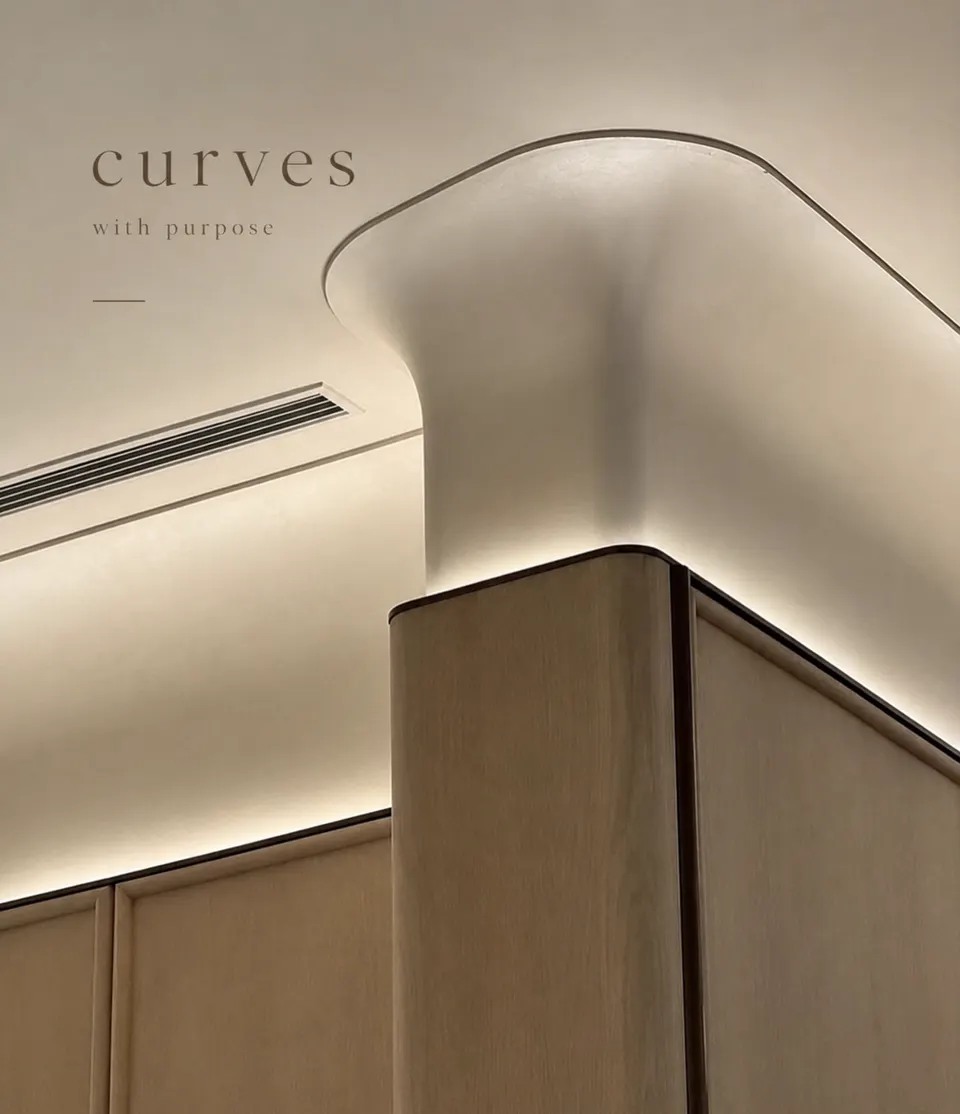
Profile lights in wall panelling, spotlights on artwork, backlit niches, lit shelving and statement pendants. Accent light is typically around three times brighter than the surrounding ambient light on the object it highlights. Fluted panels, textured walls and curved niches come alive with a grazing profile light.
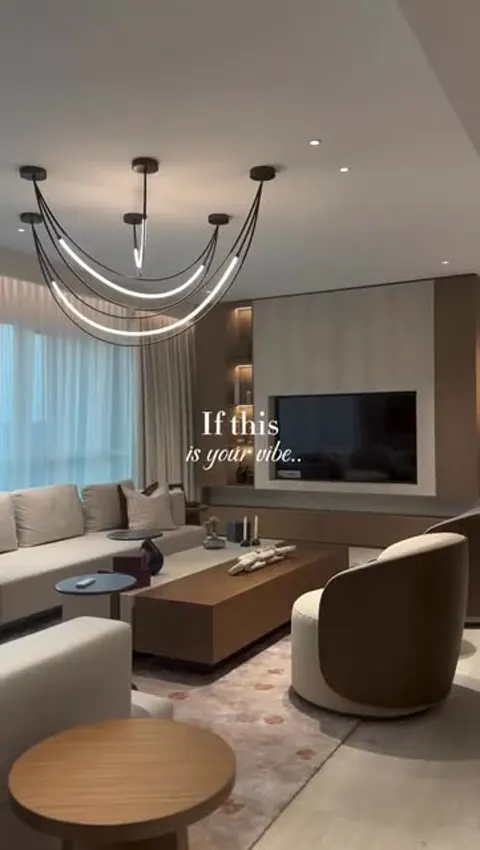
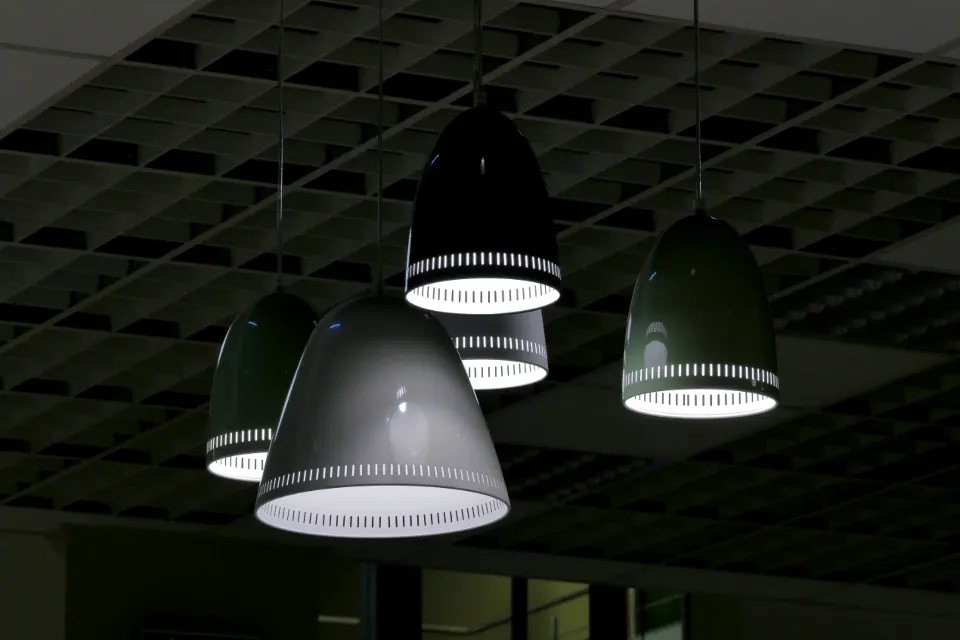
A fourth, often forgotten layer is decorative lighting: chandeliers, sculptural pendants and table lamps whose main job is to look beautiful. They contribute some light, but you choose them for form.
Which colour temperature is best for each room?
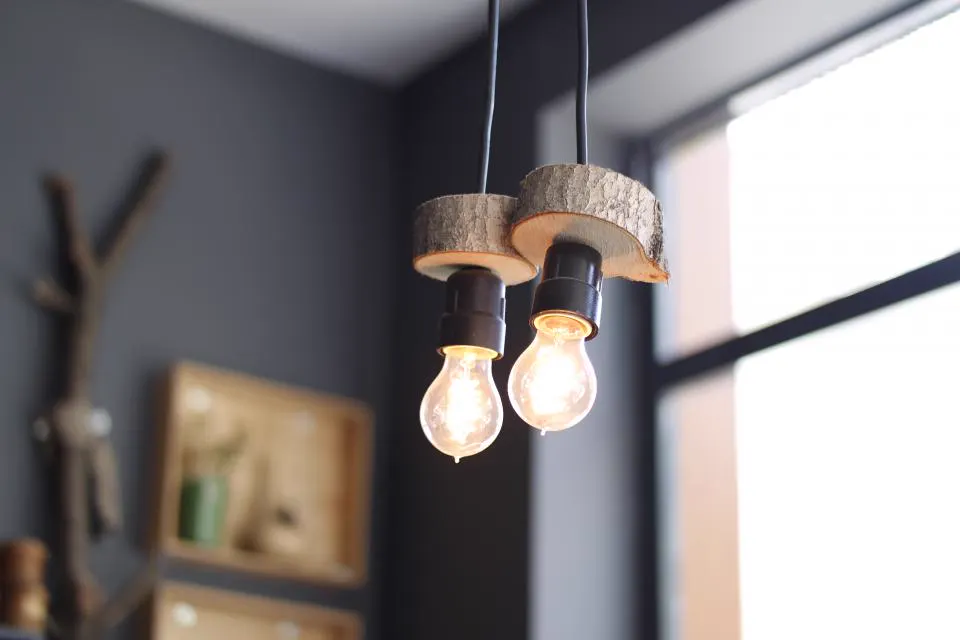
Use warm white (2700K to 3000K) for living rooms, bedrooms and dining; neutral white (3500K to 4000K) for kitchens, study tables, bathrooms and wardrobes; and avoid cool daylight (5700K to 6500K) in living spaces because it feels clinical at night.
| Space | Colour temperature | Approx. brightness target | Notes |
|---|---|---|---|
| Living room | 2700K to 3000K | 150 to 300 lux | Dimmable ambient plus accent layer |
| Bedroom | 2700K | 100 to 200 lux | Bedside reading light at 3000K |
| Dining | 2700K to 3000K | 200 to 300 lux on the table | Pendant 750mm to 850mm above table top |
| Kitchen | 3500K to 4000K | 300 to 500 lux on counter | Under-cabinet strips are essential |
| Study / home office | 4000K | 400 to 500 lux on desk | Avoid screen glare from overhead spots |
| Bathroom | 3000K to 4000K | 200 to 300 lux | IP44 or higher fittings near wet areas |
| Pooja unit | 2700K to 3000K | Soft, focused | Backlit panel or small spots on idols |
| Balcony | 2700K | Low | IP65 outdoor-rated fittings |
Lux figures are indicative design targets; your designer will adjust them for ceiling height, wall colour and daylight. Tunable white fixtures that switch between 3000K, 4000K and 6000K are useful in kitchens and multi-use rooms, but keep them on the warm setting in the evening.
CRI, beam angle and wattage: the specs that matter
Buy LED fittings with CRI 90 or higher, choose 24 to 36 degree beams for accent spots and 60 degrees or wider for general downlights, and compare fittings by lumens rather than watts.
- CRI (Colour Rendering Index): CRI 80 is common in budget fittings and makes skin tones, wood and fabrics look dull. CRI 90+ is worth the modest premium, especially in living, dining and wardrobe areas.
- Beam angle: narrow beams create pools of light for art and niches; wide beams spread light evenly for ambient use.
- Lumens: a quality 7W to 9W LED downlight often gives 600 to 800 lumens. Wattage varies across brands, so check the lumen figure.
- Anti-glare design: deep-set or honeycomb-louvred downlights hide the bright LED source, which matters in rooms where you lie down or look up.
- Driver quality: cheap drivers cause flicker and early failure. Ask for branded drivers and keep them accessible above the false ceiling.
- LED strip specs: use aluminium profiles with diffusers for strips, and plan a 24V system for long runs to avoid voltage drop.
Room-by-room lighting ideas for Indian homes
Living room
Combine a cove or peripheral false ceiling light with anti-glare downlights, a statement pendant or chandelier over the centre, and profile lights in the TV unit or wall panelling. Add one or two floor or table lamps for evenings. See our false ceiling designs for living rooms for layouts that integrate these layers.
Bedroom
Keep overhead light soft and indirect. Use wall-mounted reading lights or pendants on each side of the bed, a warm backlight behind the headboard panel and sensor strips inside wardrobes. Two-way switching at the door and the bed is a small detail that you will appreciate every night.
Kitchen
Under-cabinet strips over the counter are non-negotiable. Add evenly spaced downlights for ambient light, and a profile light inside glass-shutter units. If you have a breakfast counter, hang two or three small pendants.
Dining
Centre a pendant or linear light over the table, not the room. For a 6-seater table, a fixture about 60% to 75% of the table length looks proportionate.
Bathroom
Light the face from the front and sides, not only from above, to avoid shadows. Backlit mirrors work well. Use IP-rated fixtures in shower zones.
Foyer, passage and staircase
Low-level step lights and wall washers make passages feel safe at night, while a feature light in the foyer sets the tone the moment someone walks in.
Planning your lighting layout: step-by-step
Plan lighting after the furniture layout and before the false ceiling, because every light point depends on where the sofa, bed, table and wardrobes will sit.
- Finalise the furniture layout and 3D design.
- Mark activities in each room: reading, cooking, dressing, watching TV, praying.
- Assign ambient, task and accent layers to each activity.
- Create a reflected ceiling plan showing every fixture, switch and circuit.
- Plan switchboards at usable heights (around 1,200mm for regular switches, and near the bed for bedside control).
- Decide on dimmers or smart controls before wiring begins.
- Test sample fittings on site for colour temperature before bulk ordering.
Indicative costs in Delhi NCR vary widely. A basic, well-planned LED scheme for a 3BHK might be a modest part of the electrical budget, while decorative chandeliers and smart controls can add considerably more. Budget for lighting as a separate line item rather than squeezing it in at the end. The interior cost calculator helps you see where it fits in the overall budget.
Common lighting mistakes to avoid
- A single grid of cool-white panel lights in every room.
- Mixing 3000K and 6000K fittings in the same space.
- Downlights directly above the bed or sofa head, shining into the eyes.
- No task light under kitchen wall cabinets.
- Bare LED strips without profiles, which show visible dots on glossy surfaces.
- Pendants hung too high or too low; aim for 750mm to 850mm above a dining table.
- Forgetting switch locations until the walls are painted.
- Skipping outdoor-rated fittings on balconies, which fail quickly in monsoon humidity.
Lighting is the layer that turns a finished room into a lived-in one. If you would like a lighting plan drawn around your furniture layout, message Asaya Interiors on WhatsApp at +91 98001 08800 or explore our lighting design service.
Frequently asked questions
What is layered lighting in home interiors?
Layered lighting combines ambient light for overall brightness, task light for activities like cooking or reading, and accent light for artwork, panelling and niches. Each layer is switched separately so you can change the mood of a room through the day.
Is warm white or cool white better for a living room?
Warm white between 2700K and 3000K is generally better for living rooms. It feels relaxed in the evening and flatters wood, fabrics and skin tones. Cool daylight fittings suit utility areas more than living spaces.
What does CRI mean when buying LED lights?
CRI, or Colour Rendering Index, measures how accurately a light source shows colours compared with natural light. A CRI of 90 or above makes fabrics, wood, paint and food look natural, which is why designers specify it for key rooms.
How many downlights does a 12 x 14 ft living room need?
It depends on fitting output, ceiling height and other layers, but a typical plan might use six to eight anti-glare downlights along with cove lighting and accent lights. A lighting layout based on the furniture plan gives a more accurate answer.
When should lighting be planned during an interior project?
Plan lighting after the furniture layout is final and before false ceiling and electrical work begins. Changing light points later means cutting ceilings and walls, which adds cost and delays.
Are smart lights worth it in an Indian home?
Smart dimming and scenes are useful in living rooms and bedrooms, especially for tunable white fittings. Decide early so the wiring supports them, and choose systems that still work with regular wall switches.