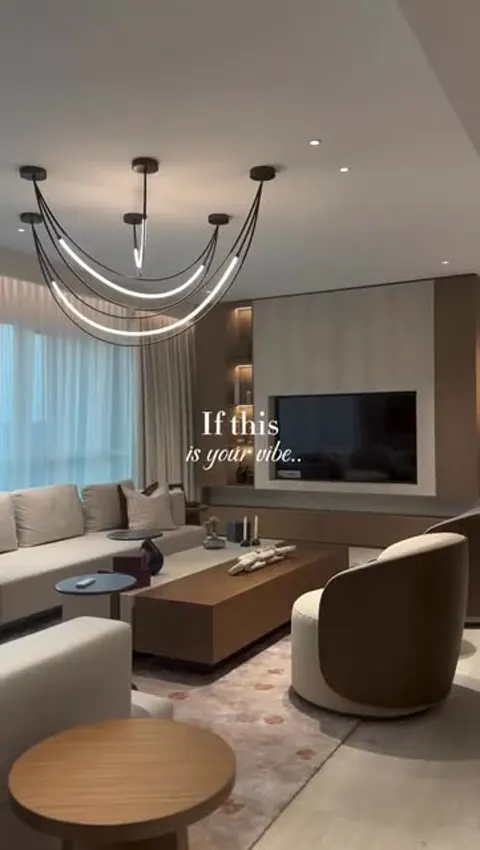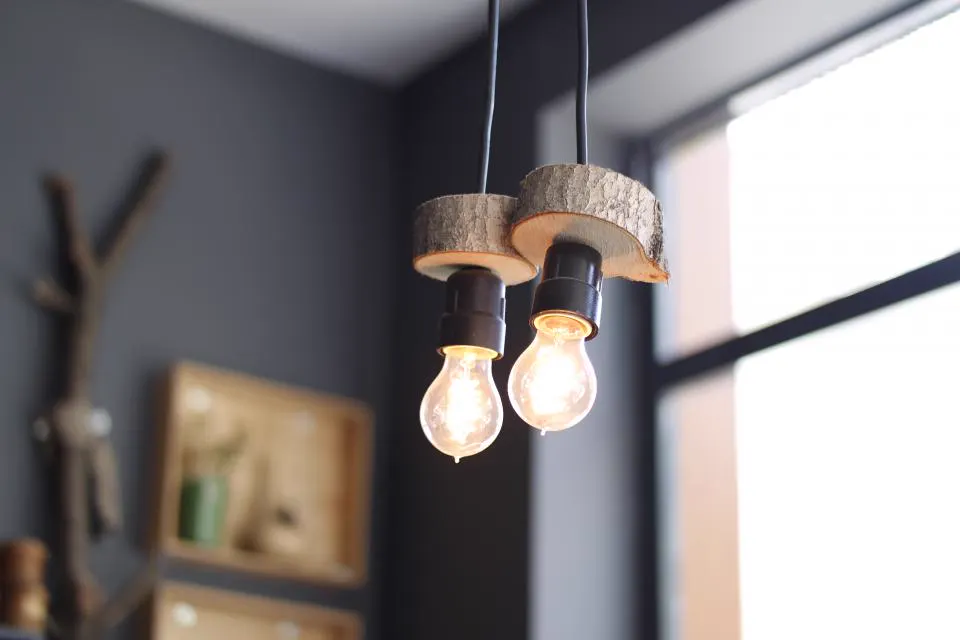
What is layered home lighting design?
Layered home lighting design uses three types of light together: ambient light for the whole room, task light where you read, cook or dress, and accent light that highlights walls, art and textures. A single row of ceiling panels can only do the first job, and usually does it with glare.
- Ambient: cove lights, recessed downlights or a central fitting that lifts the overall brightness.
- Task: under-cabinet strips in kitchens, reading lights by the bed, mirror lights in bathrooms, desk lamps in studies.
- Accent: spotlights on art, LED lines inside niches, wall washers on panelling or stone.
- Decorative: chandeliers and pendants that add personality even when switched off.
We plan all four layers together at the drawing stage so the ceiling, switchboards and furniture are ready for them.
Cove lighting and profile lights explained
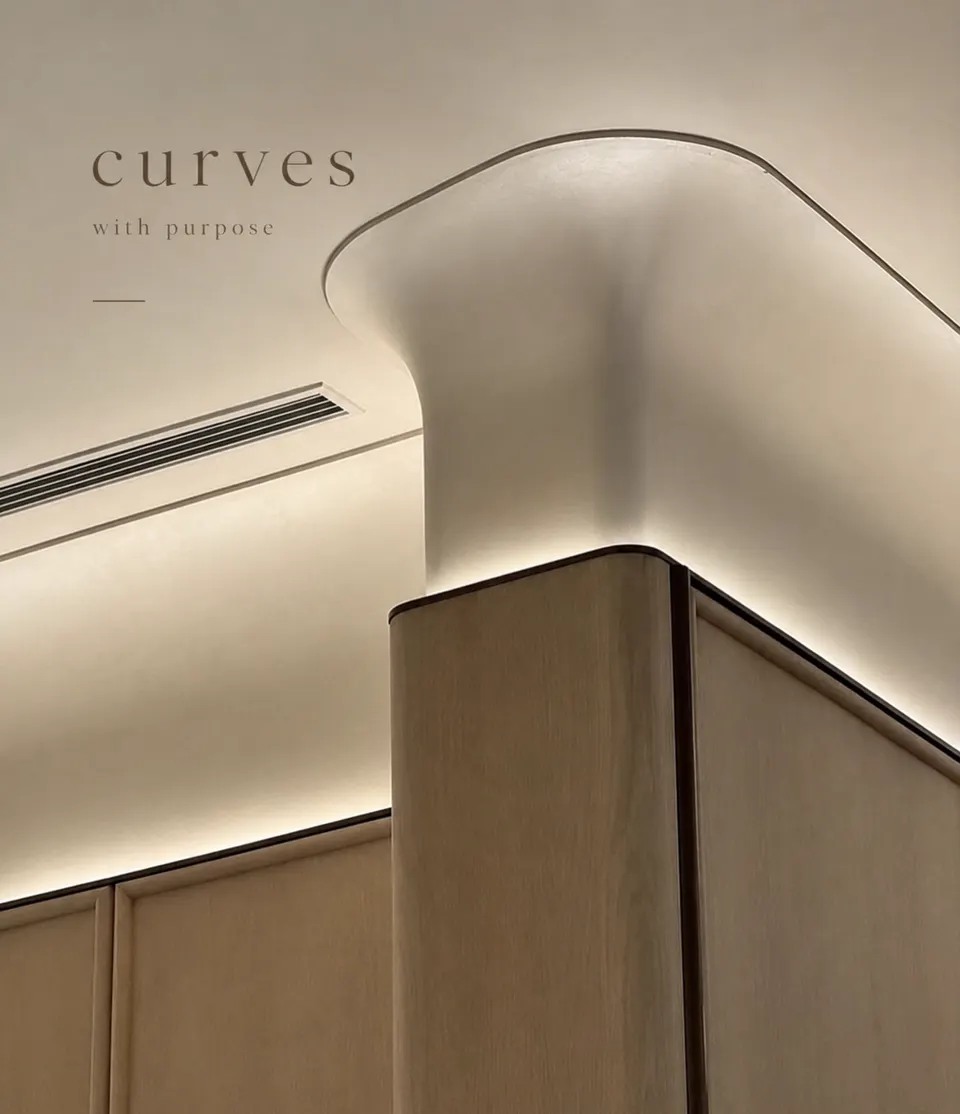
Cove lighting is indirect light hidden in a false ceiling recess that washes the ceiling softly; profile lights are slim LED strips set inside aluminium channels to draw clean lines of light on ceilings, walls and furniture.
Both work best with a few rules:
- Cove depth: a cove opening of about 100–150 mm with the strip set back from the edge avoids visible hot spots.
- Strip quality: use strips with a stated wattage per metre, CRI above 90 and a proper aluminium channel for heat dissipation.
- Diffuser: profiles need an opal diffuser so you see a smooth line, not individual dots.
- Driver access: keep drivers in reachable spots, not sealed inside a gypsum ceiling. This is the most common failure we see in older installations.
- Curves: flexible profiles follow curved ceilings and arches, like the curved false ceiling in our own project shown in the gallery.
Since most of these lights live in the ceiling, plan them with your false ceiling design. Our post on false ceiling designs for the living room shows several options.
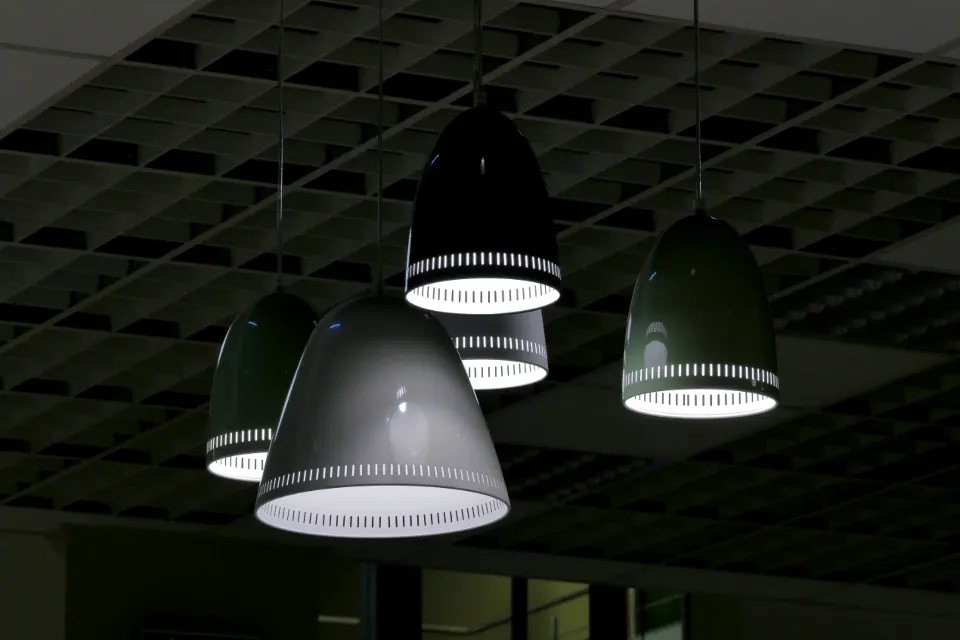
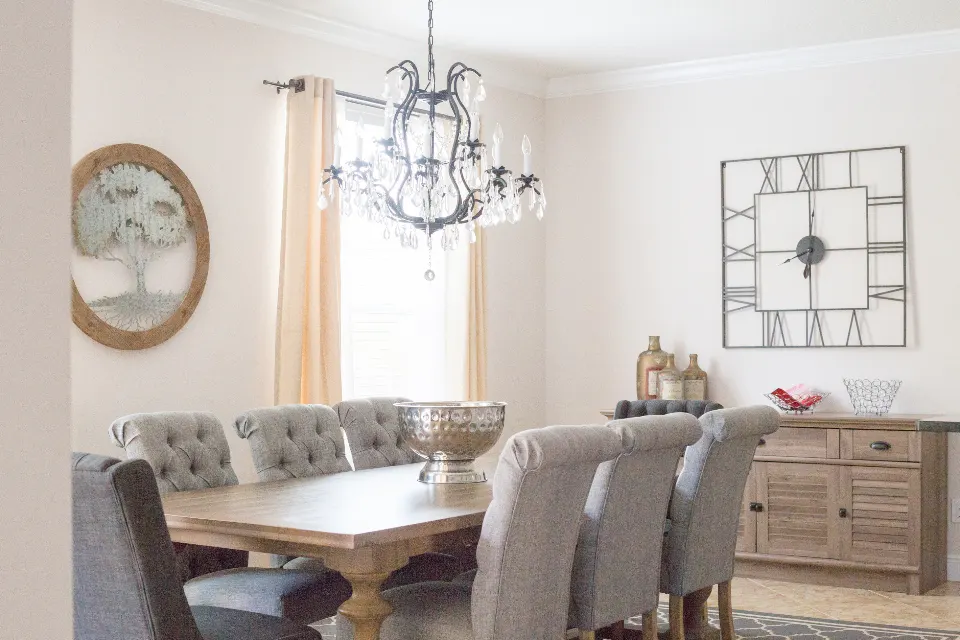
Choosing a chandelier or pendant light
Choose a chandelier by the room and table size first, then by style. A simple rule: add the room length and width in feet, and the total gives a rough chandelier diameter in inches.
- A 12 x 14 ft living room suits a fitting of about 24–28 inches across.
- Over a dining table, keep the fitting half to two-thirds of the table width and about 750–850 mm above the top.
- In double-height kothi and villa living rooms, allow at least 2.1 m of clear space below the chandelier where people walk.
- Pick warm 2700K lamps for crystal and brass fittings; they sparkle without looking harsh.
- Ask about ceiling reinforcement and a rated hook for heavy fittings.
For grand homes, see our luxury interior design service, where statement lighting is often the centrepiece.
Room-by-room lighting guide
Each room needs a different mix of brightness and colour temperature. This table is the starting point we use before adjusting to your furniture and finishes.
| Room | Target light level (approx.) | Colour temperature | Key fixtures |
|---|---|---|---|
| Living room | 150–300 lux | 2700K–3000K | Cove, spotlights on walls, chandelier, floor lamp |
| Kitchen | 300–500 lux on counter | 3000K–4000K | Downlights, under-cabinet profiles |
| Bedroom | 100–200 lux | 2700K | Cove, bedside readers, wardrobe sensor lights |
| Study / home office | 300–500 lux on desk | 4000K task, warm ambient | Task lamp, glare-free downlights |
| Bathroom | 200–300 lux | 3000K–4000K | IP-rated downlights, mirror light |
| Pooja room | Soft, focused | 2700K | Backlit panel, spotlight on the deity |
Our detailed home lighting design guide goes further, with wattage and placement tips.
Controls, dimmers and energy efficiency
Dimmers and simple scenes do more for comfort than adding more lights. Put each layer on its own switch or dimmer so you can move from bright cleaning light to a soft evening mood.
- Phase-cut or DALI dimmers with compatible drivers avoid flicker.
- Smart switches can store scenes such as Dinner, Movie and Pooja without rewiring.
- Motion sensors in wardrobes, lofts and utility areas save energy.
- Quality LEDs use far less power than older halogen spots and last much longer, which matters in homes with long power-backup hours.
Lighting mistakes we fix most often
Most poorly lit homes suffer from too many identical ceiling lights and too little light where people actually sit, read or cook. The fixes are usually simple once the problem is named.
- A grid of cool-white panels that makes the living room feel like an office. Swap to warm, lower-glare fittings and add wall light.
- Downlights directly above the bed or sofa, shining into eyes. Shift them towards walls and circulation paths.
- Mixed colour temperatures in one room, such as 6500K panels next to 3000K coves, which looks patchy.
- Cheap strips without channels that turn yellow or fail within a year or two.
- No light on vertical surfaces. Washing a panelled or textured wall makes a room feel larger and calmer than adding more ceiling lights.
Walls with texture reward good light; see how we detail them on our wall panelling and decor page.
Lighting design cost and how we work
Indicatively, lighting for a full 2BHK or 3BHK in Delhi NCR, including profiles, coves, downlights and a few decorative fittings, costs about ₹80,000 to ₹4 lakh or more, depending on brands and the number of decorative pieces.
- Essential LED layout with coves and downlights: roughly ₹80,000 – ₹1.5 lakh for a 2BHK.
- Layered design with profiles, spotlights and dimming: roughly ₹1.5 lakh – ₹3 lakh.
- Premium brands, smart controls and statement chandeliers: ₹3 lakh – ₹4 lakh and above.
These are indicative ranges; wiring changes and ceiling work are quoted separately after a site visit. Our process covers a lighting layout, fixture schedule, switchboard plan and on-site focusing of spotlights at handover. Want to see how your home could look after dark? Call Asaya Interiors on +91 98001 08800 and ask for a lighting consultation.
Frequently asked questions
What colour temperature is best for home lighting?
Warm white between 2700K and 3000K suits living rooms, bedrooms and dining areas. Neutral 4000K works better for kitchens, studies and task areas. Mixing both thoughtfully creates a home that feels relaxed yet practical.
Is cove lighting still worth it?
Yes, when it is done well. Properly detailed cove lighting gives soft, glare-free ambient light and makes ceilings feel higher. The key is a good strip, a suitable cove depth and accessible drivers for future maintenance.
What is the difference between profile lights and strip lights?
A strip light is the flexible LED tape itself. A profile light is that strip housed in an aluminium channel with a diffuser, giving a clean, even line of light and better heat management, which improves both looks and life.
What does CRI mean when choosing lights?
CRI, or Colour Rendering Index, shows how accurately a light reveals colours. A CRI of 90 or above makes skin tones, wood, fabric and food look natural, which is why we recommend it for most rooms.
How big should my living room chandelier be?
Add the room length and width in feet; the total is a rough guide to the chandelier diameter in inches. For a 12 x 14 ft room, a fitting of about 24 to 28 inches usually looks balanced.
Can you improve lighting without breaking the ceiling?
Often, yes. Surface-mounted profiles, track lights, wall lights, floor lamps and smart bulbs can transform a room without major civil work. We assess the existing wiring first to suggest the least disruptive option.