
What are the best TV unit design ideas right now?
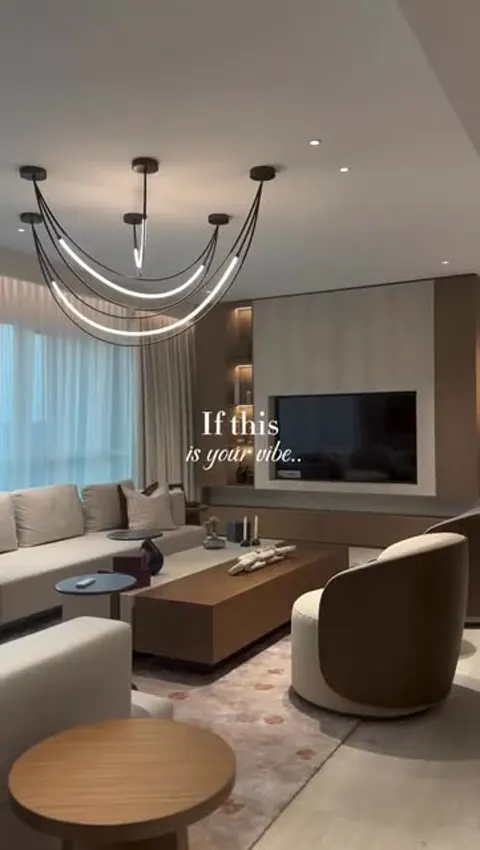
The strongest TV unit design ideas today are a floating low console with a panelled or textured backdrop, integrated profile lighting, closed storage for devices and fully concealed wiring. The TV wall has become the main feature wall of the living room, so it deserves as much design attention as the sofa.
A TV unit has three jobs: hold the screen at a comfortable height, hide the clutter of set-top boxes, routers, soundbars and cables, and look beautiful when the TV is switched off, which is most of the day. The best designs treat the black rectangle of the screen as one element in a composed wall rather than the centrepiece.
Ten TV wall design styles to consider
Pick a style that matches the rest of the room and the size of the wall; a compact flat suits a slim floating console, while a large living room can carry a full-height panelled wall.
- Floating console with fluted panel: a wall-hung unit about 300mm to 400mm above the floor, with vertical fluted MDF or wood behind the TV. Clean and easy to mop under.
- Full-height wooden panelling: veneer or laminate panels from floor to ceiling, with a recessed TV niche. Warm and premium.
- Marble or stone-look backdrop: real stone, large-format tiles or stone-finish laminates behind the TV, often book-matched. Luxurious and low maintenance.
- Arched niche wall: the TV sits within a softly arched recess flanked by arched open shelves; pairs well with curved furniture.
- Asymmetric storage wall: the TV to one side, with a tall closed cabinet or bookshelf on the other.
- Textured paint wall: limewash, microcement effect or a stucco finish behind a simple console; a budget-friendly statement.
- Slatted partition TV unit: a double-sided unit that also divides living and dining in open plans.
- Rotating TV stand: a floor-to-ceiling pole that lets the TV turn towards the living or dining area.
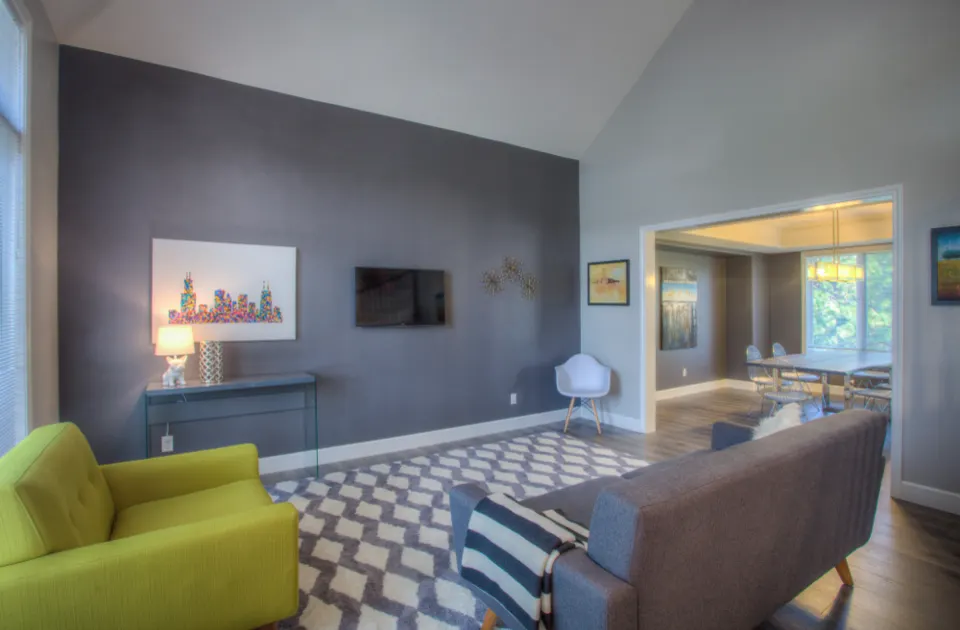
- Minimal wall mount only: the TV hung on a painted wall with a slim ledge; ideal for small bedrooms.
- Hidden TV: sliding or pocket shutters that conceal the screen, common in formal living rooms and master bedrooms.
Fluted and panelled walls are covered in more depth in our wall panelling design ideas.
How high should a TV be mounted, and how far away?
Mount the TV so the centre of the screen is roughly at seated eye level, about 1,000mm to 1,100mm from the floor in a typical Indian living room, and sit at a distance of about 1.2 to 1.6 times the screen diagonal for 4K TVs.
| Screen size | Recommended viewing distance (4K) | Suggested wall width for the unit |
|---|---|---|
| 43 inch | 1.3m to 1.8m | 1.8m to 2.4m |
| 55 inch | 1.7m to 2.2m | 2.4m to 3.0m |
| 65 inch | 2.0m to 2.6m | 2.7m to 3.6m |
| 75 inch | 2.3m to 3.0m | 3.0m to 4.0m |
- Console height: 350mm to 450mm tall for a low-slung look; a floating unit typically sits 300mm to 400mm above the floor.
- Console depth: 400mm to 450mm accommodates most set-top boxes and a soundbar.
- Bedrooms: the TV can sit slightly higher because you view it from a reclined position; tilt mounts help.
- Screen proportion: the TV should occupy roughly one-third to one-half of the wall width so the wall does not look crowded.
These figures are guidelines; always check against your sofa position in the 3D layout.
Materials for TV units: comparison and costs
Laminate on plywood or HDHMR is the most practical choice for most homes, veneer and PU give a premium finish, and stone or stone-look panels create a luxury backdrop.
| Material | Look | Durability | Relative cost |
|---|---|---|---|
| Laminate on ply / HDHMR | Wide range of wood and solid finishes | High, scratch-resistant | Budget to mid |
| Acrylic | High-gloss, sleek | Good, shows fingerprints | Mid |
| PU paint on MDF | Seamless matte or gloss | Good, needs care | Mid to premium |
| Natural veneer | Real wood grain | Good with polish | Premium |
| Fluted MDF / wood | Textured, contemporary | Good | Mid to premium |
| Marble / stone / large tiles | Luxurious | Very high | Premium |
| Charcoal / WPC panels | Textured, modern | Good, moisture-resistant | Budget to mid |
Indicative cost: in Delhi NCR, a simple floating TV console with a laminated backdrop typically starts from around ₹25,000 to ₹60,000, while full-height panelled or stone TV walls with lighting can range from about ₹80,000 to ₹3 lakh+, depending on size, material and hardware. Get a site-specific quote. For board choices behind these finishes, see our plywood grades guide.
Lighting your TV wall
Use soft, indirect light around the TV wall, such as a backlight, profile lights in the panelling or a cove above, and avoid downlights that reflect on the screen. Gentle backlighting also reduces eye strain in a dark room.
- Place a warm 2700K to 3000K LED strip behind a floating console or panel edge.
- Use vertical profile lights between fluted or panelled sections.
- Light display niches with small spots or strip lights.
- Keep ceiling downlights away from the screen or on a separate dimmable circuit.
- Consider bias lighting, a neutral light behind the TV, for movie nights.
More on layering these lights is in our home lighting design guide.
TV units for bedrooms, small flats and open plans
In bedrooms and compact flats, keep the TV unit slim and wall-hung; in open-plan homes, use the TV unit to define zones without blocking light.
Bedroom TV units
- A shallow ledge of 250mm to 300mm depth is often enough, because the set-top box can sit behind the TV or be replaced with a streaming stick.
- Integrate the TV into the wardrobe run with a recessed panel so the wall reads as one piece of joinery.
- Keep the screen away from the window wall to avoid morning glare.
- Use a tilt bracket if the bed is low and the TV sits higher on the wall.
Small living rooms
- Choose a floating console of 1,500mm to 1,800mm width with one closed drawer and one open section.
- Use a light-toned panel or the wall colour behind the TV so the wall does not advance visually.
- Use tall, narrow open shelves on one side rather than wide overhead cabinets.
Open-plan living and dining
- A double-sided slatted partition can hold the TV on the living side and a crockery or display unit on the dining side.
- Keep partitions at least partly open so daylight reaches both areas.
- A swivel TV pole is useful if the family watches from the dining table as well.
If you live in a compact home, our small apartment interior ideas include more multi-purpose joinery.
Common TV unit mistakes to avoid
- Mounting the TV too high, often above a tall console, causing neck strain.
- Deciding the TV size after the unit is built.
- Forgetting the router, inverter display or set-top box, which then sits on the console with wires hanging.
- Glossy panels opposite a window, which create glare on the screen.
- Overcrowding the wall with too many open shelves that collect dust.
- Placing the TV opposite a large window, which makes daytime viewing difficult.
- Using ordinary MDF in a room where the wall has seepage issues; fix damp first.
A well-designed TV wall anchors the whole living room. See our TV unit design service or our living room interior design work, then call Asaya Interiors on +91 98001 08800 to get a TV wall drawn to your exact screen, sofa and wall size.
Frequently asked questions
What is the standard height of a TV unit?
A low TV console is typically 350mm to 450mm tall, and a floating unit is usually mounted 300mm to 400mm above the floor. The centre of the TV screen should be roughly at seated eye level, around 1,000mm to 1,100mm from the floor.
Which material is best for a TV unit?
Laminate on good-quality plywood or HDHMR is the most practical and durable choice. For a premium look, consider veneer, PU finish, fluted panels or stone backdrops, keeping budget and maintenance in mind.
How do I hide TV wires on a wall?
Install a concealed conduit inside the wall or behind the TV panel before finishing, and place sockets directly behind the TV and inside the console. Adding spare HDMI and LAN pull wires helps with future upgrades.
Should the TV unit be wall-mounted or floor-standing?
Wall-mounted floating units look cleaner, make floor cleaning easier and suit most modern homes. Floor-standing units offer more storage and suit rented homes or walls that cannot take heavy fixings.
How far should the sofa be from a 55 inch TV?
For a 4K 55 inch TV, a viewing distance of roughly 1.7m to 2.2m works well. Adjust based on personal comfort, room size and the resolution of the content you usually watch.